November 2026 · Shop tips
AC Compressor Repair Starts With the Right Diagnosis

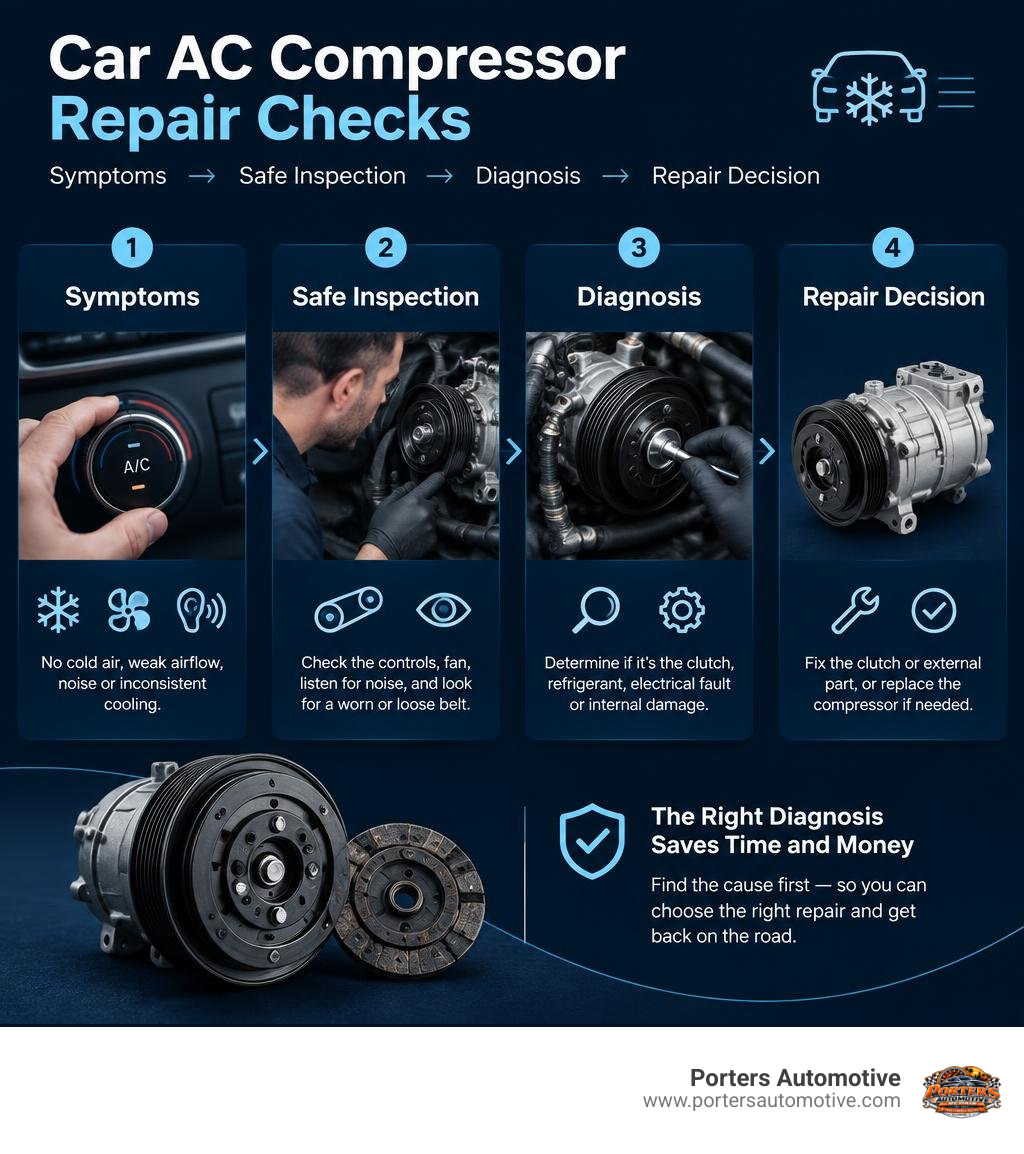
For ac compressor repair, start with the simple checks: set the controls to cold, confirm the fan blows, and listen for squealing or grinding when the AC is on. With the engine off, look for a worn or loose drive belt. If cooling comes and goes, the compressor clutch may be failing, but low refrigerant or an electrical fault can cause similar symptoms. Turn the AC off if you hear grinding or smell burning, and have a technician find the cause before replacing parts.
An early diagnosis may mean fixing the clutch or another external part instead of replacing the whole compressor. If the compressor is damaged inside, replacement may be the safer, more reliable choice.
I'm Heath Porter, owner of Porters Automotive, and I've worked in automotive service since 2006. I approach ac compressor repair by finding the cause first, so you can make a clear decision and get back on the road.
Warning Signs and Root Causes of Compressor Failure
An automotive air conditioning system relies entirely on the compressor to pressurize refrigerant vapor and circulate it through the condenser, expansion valve, and evaporator. However, many drivers assume that the moment cold air stops flowing, the entire compressor is ruined. In reality, a large percentage of early cooling issues stem directly from the external clutch assembly rather than the internal pump mechanism.
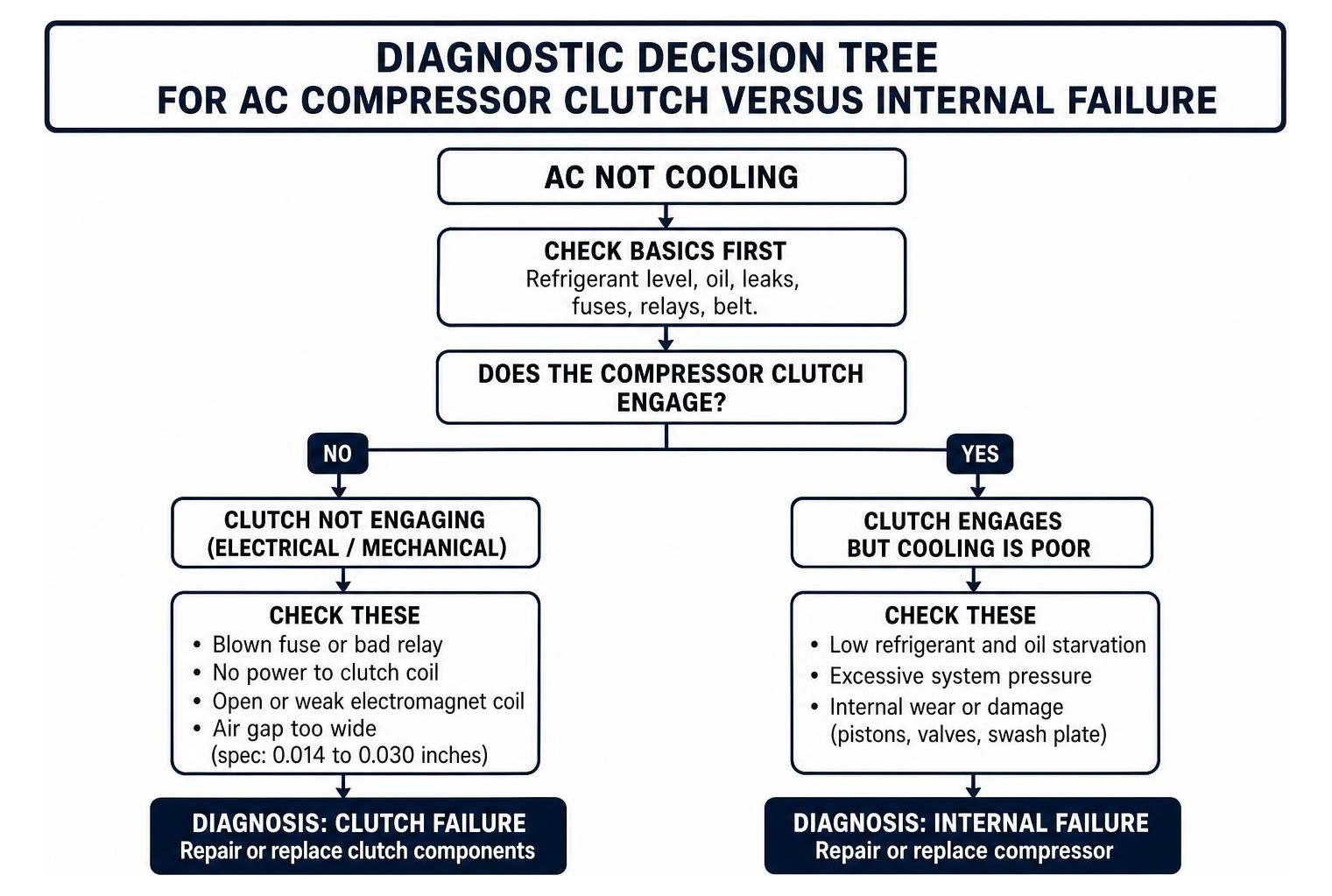
Before jumping to worst-case scenarios, it helps to check these basics before repairing your car's AC. Technicians often reference technical diagnostic workflows for compressor troubleshooting to systematically separate clutch engagement failures from internal hydraulic faults.
Common Symptoms of a Bad AC Compressor Clutch
When an AC clutch begins to wear out or lose its electrical hold, your vehicle will exhibit several distinct warning signs:
- Intermittent Cooling: The air blowing from your vents feels ice-cold one minute and lukewarm the next. This happens when the electromagnetic coil weakens with heat, causing the clutch plate to slip or disengage unexpectedly.
- Loud Squealing or Chirping: A high-pitched squeal when you turn the AC on usually points to clutch slippage or an improperly tensioned serpentine belt rubbing against a dragging pulley.
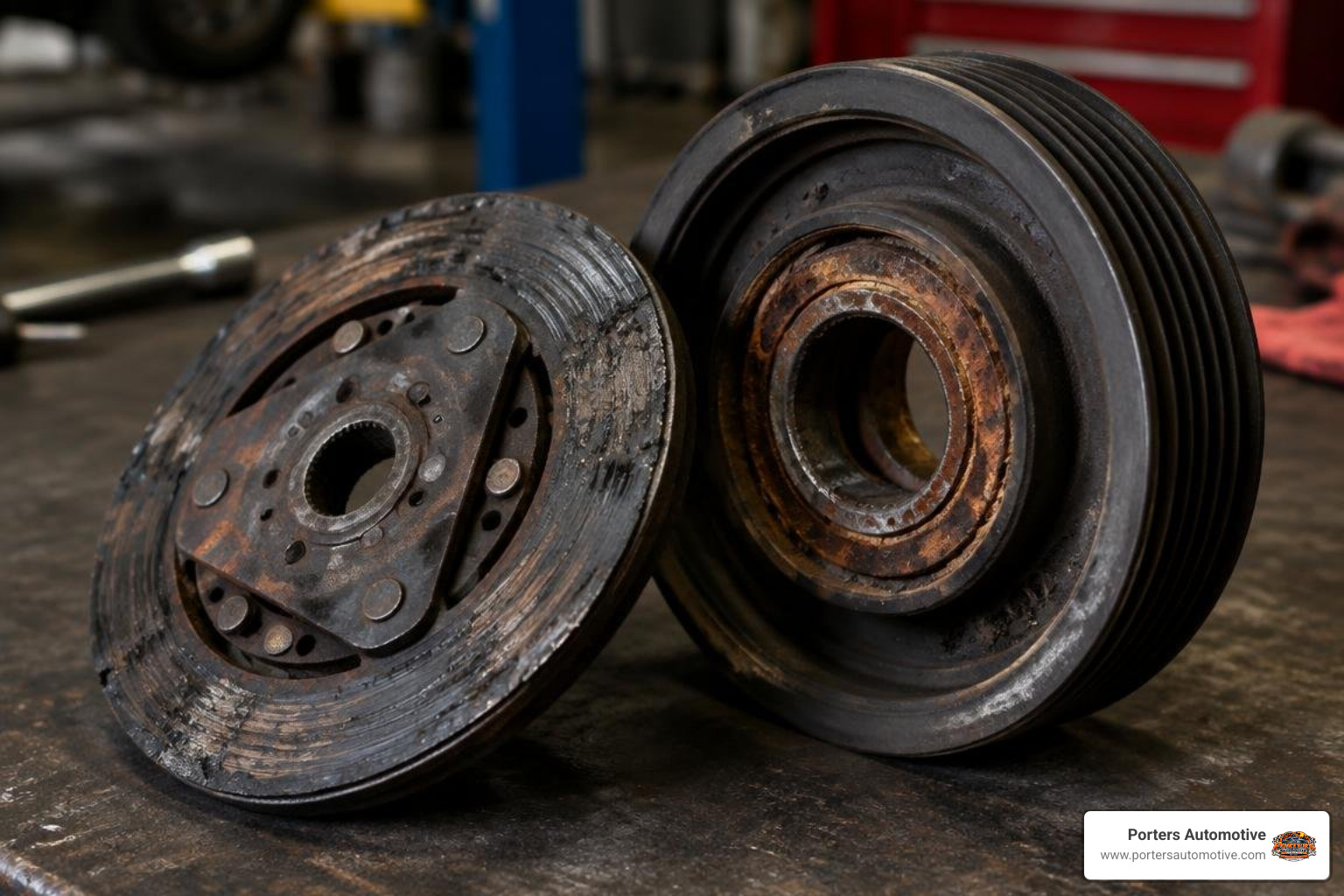
- Grinding or Rattle Sounds: A constant grinding noise that occurs even when the AC is switched off points toward a failed pulley bearing. If the noise only occurs when the AC turns on, the internal clutch friction surfaces are severely worn.
- Visible Rust or Dust Around the Pulley Hub: Brown, reddish dust surrounding the clutch hub is a classic indicator of thermal breakdown, where friction has ground down the clutch plate.
- A Visible Air Gap That Is Too Wide: Over time, friction wears down the metal plates. If the physical gap between the pulley and the clutch engagement plate exceeds factory clearance (typically 0.014 to 0.030 inches), the electromagnet cannot pull the plate in.
Root Causes Behind Premature Compressor Wear
Compressors operate under rigorous pressure, and the clutch takes the brunt of physical engagement every time the system cycles. Common underlying culprits include:
- Low Refrigerant and Oil Starvation: Refrigerant carries specialized PAG or POE oil throughout the system to lubricate moving parts. A slow refrigerant leak starves the system of oil, creating heavy drag on internal pistons. This added resistance forces the clutch to work harder, generating excessive heat that cooks the electromagnetic coil.
- Electromagnetic Coil Burnout: Voltage fluctuations or sustained thermal exposure degrade the fine copper windings within the field coil, causing an open circuit.
- Excessive Thermal Cycling: Driving in stop-and-go traffic under intense Southern summer heat causes rapid on-off cycling. This thermal stress accelerates friction plate wear.
Step-by-Step Diagnostic and AC Compressor Repair Guide
Proper diagnosis prevents the unnecessary expense of replacing functioning components. We focus on automotive air conditioning repair that targets root causes to ensure you only pay for what actually needs fixing.
Testing Electrical Windings and Clutch Coil Resistance
To confirm whether a clutch failure is electrical or mechanical, use a digital multimeter following standard automotive guidelines:
- Disconnect the Coil Connector: Locate the electrical pigtail leading to the compressor clutch field coil and unplug it.
- Measure Resistance (Ohms): Set your multimeter to the low-resistance setting (ohms). Place the positive probe on the coil's power terminal and the negative probe on a clean engine ground (or the ground pin in a two-wire connector).
- Normal Reading: Most standard 12-volt passenger vehicle clutch coils should read between 3.0 and 4.5 ohms.
- Open Circuit (OL / Infinite): Indicates broken internal wiring; the coil is dead and must be replaced.
- Near-Zero Resistance (Short): Indicates a short circuit that will repeatedly blow the AC fuse or damage the AC relay.
- Perform Voltage Drop Testing: Check for 12 volts at the harness connector with the engine running and AC switched on. If 12 volts are present but the clutch does not engage, the coil or ground circuit is bad. If no voltage is present, check your AC fuse, relay, and high/low pressure switches.
Safe DIY Steps for AC Compressor Repair
If your compressor still has healthy internal pressures and the fault is isolated to the clutch, hub, or bearing, you can often service the clutch without opening the closed refrigerant loop.
- Release Serpentine Belt Tension: Relieve tension on the serpentine belt using a breaker bar or tensioner tool, then slide the belt off the AC compressor pulley.
- Hold the Clutch Hub: Use a specialized clutch-holding spanner tool to prevent the hub from spinning while loosening the center retaining bolt.
- Extract the Hub Plate: Thread an AC clutch puller tool into the hub to back the plate off the splined shaft smoothly without bending the compressor nose.
- Remove Shims and Retaining Snap Rings: Note the tiny clearance shims located inside the hub center. Remove the external snap ring securing the pulley bearing using snap ring pliers.
- Pull the Pulley and Field Coil: Slide the pulley assembly off the nose. Remove the second snap ring securing the electromagnetic field coil to the compressor body, then install the new coil and pulley.
- Set the Air Gap: Reinstall the clutch plate with appropriate shims. Use a feeler gauge to verify that the clearance between the clutch plate and pulley face sits between 0.014 and 0.026 inches across all sides before torquing the center bolt to factory specifications.
Comparing Clutch Repair vs Full System Replacement
Deciding between replacing a clutch assembly and replacing the complete compressor comes down to internal system health, age, and overall cost-effectiveness.
| Factor | AC Compressor Clutch Repair | Full AC Compressor Replacement |
|---|---|---|
| Typical Cost Range | $250 – $600 | $1,080 – $2,500+ |
| Labor Time | 1.5 – 3 Hours | 4 – 7 Hours |
| Refrigerant Evacuation Needed? | No (Usually external) | Yes (Mandatory recovery & recharge) |
| Associated Parts Changed | Hub, Pulley, Bearing, Coil | Compressor, Receiver Drier, Expansion Valve, O-rings |
| System Flush Required? | No | Yes (Mandatory if debris is present) |
| Ideal For | Worn bearings, burnt coil, healthy internals | Seized pistons, metal contamination, high mileage |
Estimating the Cost of AC Compressor Repair
When budgeting for repairs, it helps to understand what goes into expected vehicle AC servicing charges. A standalone clutch and coil kit typically costs between $100 and $250 for parts, with professional installation labor running $150 to $350.
In contrast, a complete compressor replacement demands new refrigerant, specialized recovery labor, a fresh receiver-drier or accumulator, and an expansion device, bringing total shop bills between $1,080 and $2,000+ depending on make and model. Taking time when finding reliable auto air conditioning repair helps ensure your technician accurately tests the clutch before quoting an entire system replacement.
When to Replace the Entire Compressor Unit
Clutch replacement is only viable if the internal pump remains intact. You must replace the complete compressor assembly if:
- The compressor shaft is locked solid and cannot be turned by hand.
- An inspection of the manifold lines reveals silver glitter or dark residue (known in the industry as "black death"), caused by disintegrated internal pistons.
- The compressor housing or shaft seals show visible oil seepage and pressure loss.
Essential Safety Precautions and Maintenance Tips
Working with automotive air conditioning involves high pressures, mechanical drive belts, and strict environmental requirements:
- Never Vent Refrigerant: Refrigerant must never be released into the atmosphere. Certified recovery machines must be used to capture R-134a or R-1234yf refrigerants.
- High-Voltage Caution: If you drive a hybrid or electric vehicle, your AC compressor runs on high-voltage electrical current (typically 200V to 600V) driven by an internal inverter motor rather than an engine belt. Servicing these units requires specialized insulated safety gear and non-conductive POE compressor oil.
- Protect Your Eyes and Hands: Compressed refrigerant can cause instant frostbite upon contact with bare skin or eyes. Always wear ANSI-rated safety goggles and protective gloves.
- Maintain Clean Condenser Coils: Rinse bugs, road dirt, and leaves from the front condenser radiator using low-pressure water twice a year to keep operating head pressures low.
- Replace Cabin and Engine Filters: Clean airflow across the evaporator core prevents system freezing and stabilizes operating pressures.
Frequently Asked Questions about AC Compressor Repair
Can I replace just the AC compressor clutch without opening refrigerant lines?
Yes. On most belt-driven automotive compressors, the clutch plate, pulley bearing, and electromagnetic field coil sit externally on the nose of the compressor housing. Because these parts do not penetrate the internal refrigerant chamber, you can replace them without evacuating the refrigerant, provided there is enough clearance in the engine bay to access the front of the compressor.
How long does an automotive AC compressor typically last?
A well-maintained car AC compressor typically lasts between 10 to 12 years or 150,000 to 200,000 miles. In hot and humid climates like Florida, compressors run longer and work significantly harder, which can accelerate wear on both the clutch friction surfaces and the internal swash plates.
Is it safe to drive with a malfunctioning AC compressor?
If the failure is strictly electrical (such as a bad coil) and the pulley spins freely, it is generally safe to drive temporarily with the AC switched off. However, if the pulley bearing is grinding or loose, continuing to drive risks throwing or shredding the serpentine belt. If the serpentine belt breaks, it will disable your alternator, water pump, and power steering, quickly causing catastrophic engine overheating.
Conclusion
Catching AC compressor issues early saves you money and prevents unexpected breakdowns during peak summer heat. By recognizing warning signs like intermittent cooling, squealing belts, and slipping clutch plates, you can often address the problem with a targeted clutch repair rather than an expensive, full-system replacement.
At Porters Automotive, our team provides thorough diagnostic testing, honest recommendations, and expert professional vehicle maintenance and repair services across our locations in Tallahassee, FL, Quincy, FL, and Bradfordville, FL. If your air conditioner is blowing warm air or making unusual noises, schedule an inspection with us today to keep your ride comfortable and reliable.
— Heath Porter, Porters Automotive