October 2026 · Shop tips
How to Choose Auto Air Conditioning Repair Near You
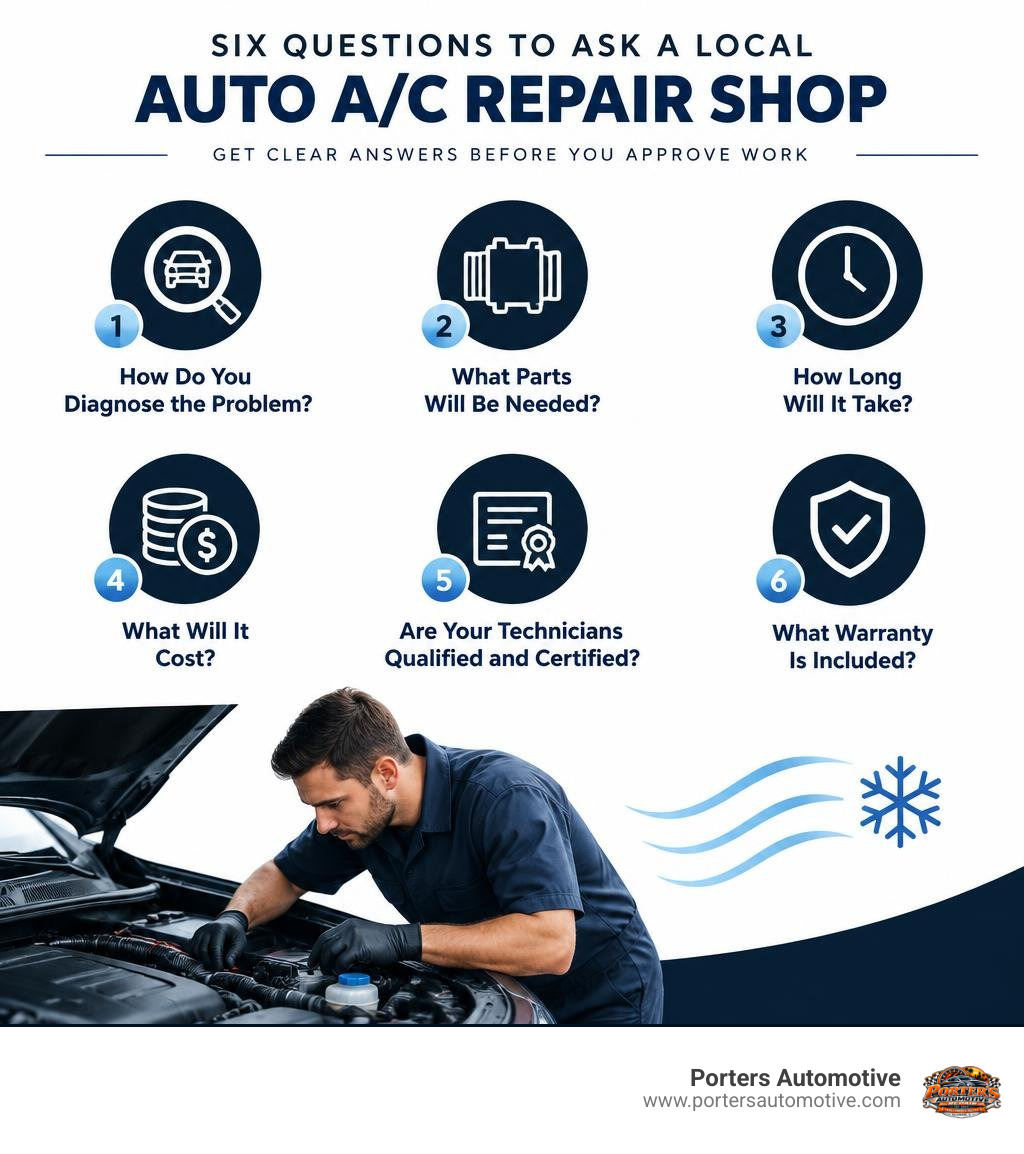
If you're searching for auto air conditioning repair near me in Tallahassee, ask each shop how it diagnoses the problem, what the repair may cost, how long it may take, and what warranty applies. Warm air does not always mean the system needs a recharge; a leak, failed part, or electrical fault may be the cause.
I'm Heath Porter, owner of Porters Automotive in Tallahassee, and I've worked in automotive service since 2006. When people search for auto air conditioning repair near me, I want them to know which questions help them get clear answers before approving work.
Question 1: What Are the Warning Signs That My A/C System Needs Professional Repair?
When you step into your car on a sweltering Florida afternoon, you expect an immediate wave of crisp, cold air. When that does not happen, your vehicle is signaling that something in the climate control system has failed. Recognizing these symptoms early prevents minor mechanical faults from cascading into expensive component replacements.
The most common warning signs that your vehicle requires professional attention include:
- Warm or Lukewarm Airflow: If your vents blow air that matches the outdoor temperature, your system may have lost its charge, suffered a compressor failure, or experienced an electrical fault in the blend doors.
- Weak Airflow: Even if the air feels cool, a weak breeze suggests a clogged cabin air filter, an obstructed blower motor, or an issue within the ventilation ducting.
- Foul or Musty Odors: A pungent, dank, or mildew-like smell coming from the dashboard vents usually points to bacterial and mold growth on the evaporator core. Chemical odors can indicate active refrigerant or heater core leaks.
- Unusual Noises: Rattling, squealing, or grinding sounds upon pressing the A/C button often stem from a worn compressor clutch, failing bearings, or a loose serpentine drive belt.
- Moisture or Water on the Floorboards: Puddles inside the cabin near the passenger footwell indicate that the evaporator drain line is clogged, backing up condensation inside your vehicle interior.
- Visible Refrigerant Leaks or Oily Residue: A/C systems are closed circuits. Any greasy film around hose fittings, service ports, or the condenser face indicates refrigerant and lubricant escaping.
Before assuming major components have broken down, drivers can perform basic troubleshooting checks to verify external settings, fuses, and filter cleanliness. However, internal pressure loss and mechanical failure require specialized garage equipment to resolve safely.
Question 2: How Does Your Diagnostic and Leak Detection Process Work?
A reliable auto repair shop will never simply inject refrigerant into your vehicle and send you on your way without finding out why the charge was low in the first place. Modern automotive climate systems operate in a sealed loop. If the refrigerant level drops, a leak exists.
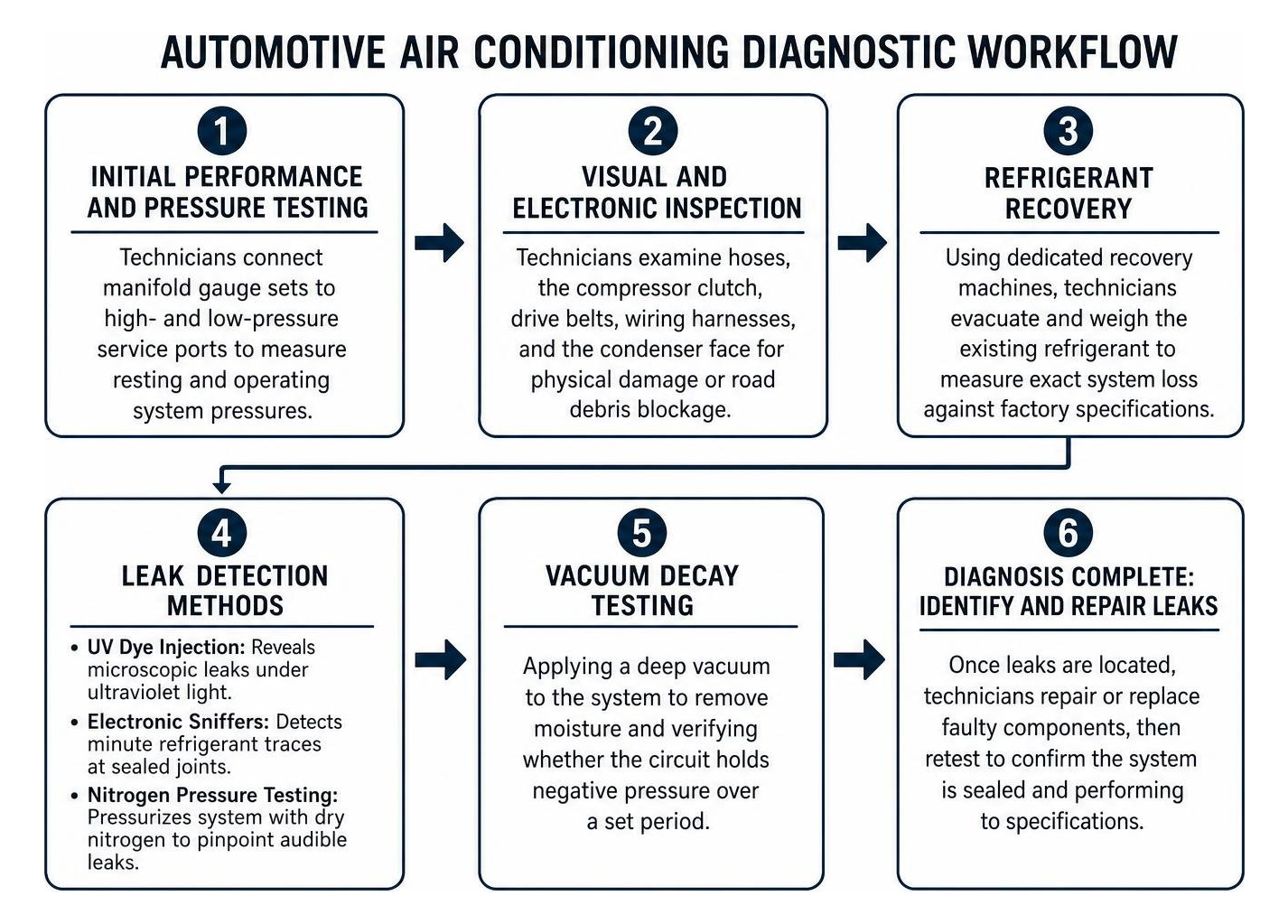
When you ask a service facility about their diagnostic workflow, they should outline a systematic, multi-step evaluation:
- Initial Performance and Pressure Testing: Technicians connect professional manifold gauge sets to high- and low-pressure service ports to measure resting and operating system pressures.
- Visual and Electronic Inspection: Technicians examine hoses, the compressor clutch, drive belts, wiring harnesses, and the condenser face for physical damage or road debris blockage.
- Refrigerant Recovery: Using dedicated recovery machines, technicians evacuate and weigh the existing refrigerant to measure exact system loss against factory specifications.
- Leak Detection Methods:
- UV Dye Injection: Adding fluorescent dye that glows under ultraviolet light to reveal microscopic seepage points at O-rings and hose crimps.
- Electronic Sniffers: Using handheld halogen detectors capable of sensing minute chemical concentrations along sealed joints.
- Nitrogen Pressure Testing: Pressurizing an empty system with dry nitrogen to pinpoint audible leaks without venting chemical refrigerants.
- Vacuum Decay Testing: Applying a deep vacuum to the system to remove moisture and verifying whether the circuit holds negative pressure over a set period.
Understanding how a shop approaches diagnostics helps ensure you receive a thorough repair rather than a temporary patch.
Question 3: Which Components Most Commonly Fail and Might Need Replacement?
Your vehicle's cooling circuit relies on mechanical, chemical, and electrical components working in synchrony. High operating pressures, extreme engine bay heat, and constant vibration cause wear over time.
| A/C Component | Primary Function | Common Failure Symptoms | Typical Root Cause |
|---|---|---|---|
| A/C Compressor | Pumps and pressurizes refrigerant throughout the closed system | Grinding sounds, warm air, clutch fails to engage | Internal bearing wear, lubrication starvation, electrical coil failure |
| Condenser | Releases heat from high-pressure gas to turn it into liquid | Poor cooling at idle, visible oil stains | Road debris punctures, bent cooling fins, internal clogging |
| Evaporator Core | Absorbs cabin heat as low-pressure liquid evaporates into gas | Musty odors, damp floorboards, weak cooling | Corrosion, mold accumulation, blocked condensation drain line |
| Thermal Expansion Valve / Orifice Tube | Regulates refrigerant flow and pressure drop into the evaporator | Iced-over A/C lines, erratic cooling performance | Internal blockage from debris or degraded desiccant material |
| Blower Motor & Resistor | Forces chilled air through dash vents into the passenger cabin | No air from vents, fan only operates on high speed | Electrical motor burnout, failed resistor pack, rodent intrusion |
| Cabin Air Filter | Filters dust, pollen, and debris before air enters the cabin | Stuffy interior, reduced airflow, lingering cabin odors | Natural accumulation of dirt and airborne particles |
Asking your mechanic to detail which of these parts has failed—and to show you the worn component—ensures transparency and helps you plan your maintenance budget.
Question 4: How Long Does Repair Take and Can I Safely Drive Without A/C?
Understanding repair timelines and safety implications helps you make informed decisions when your climate control stops working.

Repair Turnaround Times
The duration of an automotive A/C service depends directly on the root problem:
- Refrigerant Evacuation and Recharge: Typically completed in about 1 hour, including performance and vacuum decay tests.
- Cabin Air Filter or Blower Motor Resistor: Usually takes 30 to 60 minutes.
- Condenser or Drive Belt Replacement: Generally takes 2 to 3 hours, depending on front bumper removal requirements.
- Compressor Replacement with System Flush: Often requires 3 to 5 hours to ensure metal shavings from the failed compressor are entirely flushed from lines, followed by receiver-drier replacement and deep evacuation.
- Evaporator Core Replacement: Can take 4 to 8 hours because it frequently requires disassembling the vehicle dashboard.
Can You Safely Drive Without A/C?
While driving with a broken air conditioner will not mechanically disable your engine under normal conditions, it creates genuine driving hazards during hot and humid weather:
- Driver Fatigue and Slower Reaction Times: Prolonged exposure to high cabin temperatures elevates heart rate, increases dehydration, and diminishes mental alertness behind the wheel.
- Impaired Defrosting Capability: Your vehicle's defroster relies on the A/C compressor to dehumidify air before blowing it across the windshield. Without a functioning compressor, clearing fogged windows during rainstorms becomes difficult.
- Compressor Seizure Risks: If an A/C compressor fails mechanically or its bearing locks up, it can snap the serpentine drive belt, disabling your alternator, power steering, and water pump.
Professional technicians maintain proper recovery standards during all repair stages to protect both vehicle performance and environmental safety.
Question 5: What Qualifications and Warranties Apply to Auto Air Conditioning Repair Near Me?
When selecting a repair facility, evaluating credentials and warranty protections guarantees that your vehicle receives expert care backed by reliable guarantees.
What Credentials Should I Look for When Searching for Auto Air Conditioning Repair Near Me?
Automotive climate control repair demands specialized training, certified equipment, and precise handling of pressurized chemicals. Key qualifications to verify include:
- ASE (Automotive Service Excellence) Certifications: Demonstrates that technicians have passed standardized testing in heating, electrical, and climate control systems.
- EPA Section 609 Certification: Federal law requires technicians who service motor vehicle air conditioning systems to be certified in proper refrigerant recovery and recycling techniques.
- Proper Diagnostic Equipment: A professional shop utilizes dedicated recovery and recharge stations calibrated for specific refrigerants (such as R-134a and R-1234yf) rather than generic DIY charging cans.
- Better Business Bureau (BBB) Standing: High ratings reflect a proven track record of ethical customer communication, transparent estimates, and reliable workmanship.
What Repair Warranties Should Auto Air Conditioning Repair Near Me Include?
A dependable repair facility stands firmly behind its labor and replacement components. When evaluating quotes, look for:
- Minimum 12-Month / 12,000-Mile Warranty: Standard warranty protection covering both installed parts and the associated labor costs.
- Extended Warranty Options: Premium component warranties that protect major hardware like compressors and condensers for 24 to 36 months.
- Written Estimates and Clear Invoicing: Comprehensive documentation detailing parts, labor, refrigerant weight, and warranty terms before any work begins.
Staying informed through regular automotive care updates helps you spot maintenance needs early and choose qualified service providers.
Question 6: How Frequently Should I Schedule Preventive A/C Maintenance and Recharges?
Vehicle owners often wait until their vents blow hot air before seeking professional service. However, proactive maintenance prevents costly breakdowns and preserves optimal cooling efficiency.
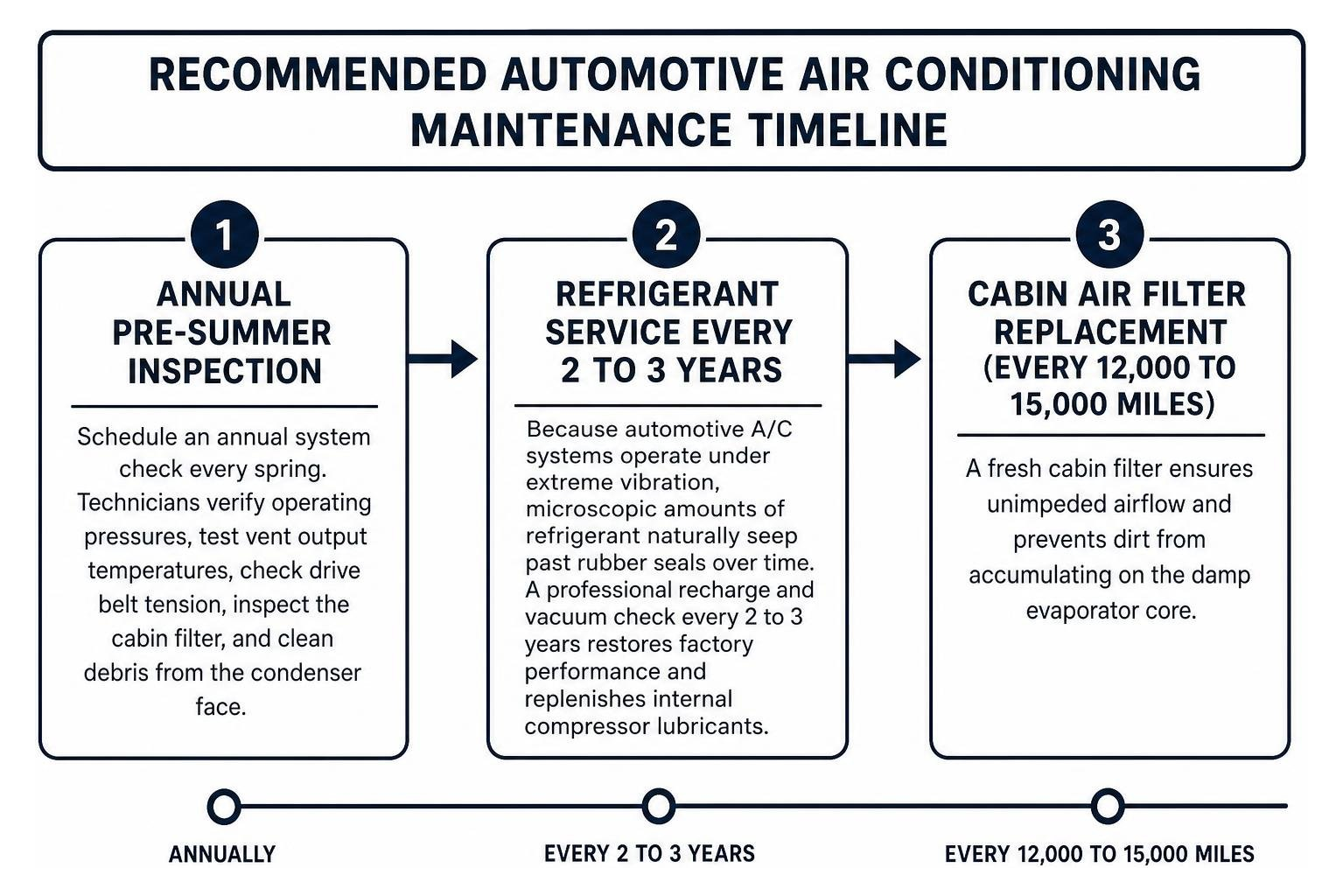
Automotive industry best practices recommend the following maintenance schedule:
- Annual Pre-Summer Inspection: Schedule an annual system check every spring. Technicians verify operating pressures, test vent output temperatures, check drive belt tension, inspect the cabin filter, and clean debris from the condenser face.
- Refrigerant Service Every 2 to 3 Years: Because automotive A/C systems operate under extreme vibration, microscopic amounts of refrigerant naturally seep past rubber seals over time. A professional recharge and vacuum check every 2 to 3 years restores factory performance and replenishes internal compressor lubricants.
- Cabin Air Filter Replacement (Every 12,000 to 15,000 Miles): A fresh cabin filter ensures unimpeded airflow and prevents dirt from accumulating on the damp evaporator core.
Consistent care protects your compressor from premature wear and ensures dependable comfort year-round.
Frequently Asked Questions About Auto Air Conditioning
What causes my car A/C to blow warm air instead of cold?
Warm air blowing from your dashboard vents is most commonly caused by:
- Low Refrigerant Levels: Escaping refrigerant lowers system pressure, preventing the evaporator from cooling incoming air.
- Failed Compressor or Clutch: If the compressor fails to engage, refrigerant cannot circulate through the high- and low-pressure stages.
- Faulty Blend Door Actuator: A broken motorized blend door inside the dashboard can physically block cold air and route hot heater core air into the cabin instead.
- Blown Fuses or Electrical Relays: Electrical faults can prevent pressure switches and cooling fans from operating.
Why does my car A/C make strange grinding or squealing noises when turned on?
Unusual sounds indicate mechanical strain within moving parts:
- Squealing Noises: Typically caused by a loose, glazed, or worn serpentine belt slipping across the compressor pulley under load.
- Grinding or Growling Sounds: Often indicate worn internal compressor bearings or a damaged compressor clutch assembly.
- Clicking or Flapping Sounds: Commonly caused by leaves or debris caught inside the blower motor wheel behind the glovebox.
How can I keep my car cool if my A/C stops working?
If your climate control system fails while you are waiting for a repair appointment, use these practical steps to manage cabin heat:
- Reflective Sunshades: Place a reflective shade across your windshield whenever parked to block radiant heat.
- Park in Shaded Areas: Utilize parking garages, carports, or tree shade to keep interior surfaces cooler.
- Crack Windows Slightly: Leaving windows open a fraction of an inch creates cross-ventilation, releasing trapped hot air.
- Seat and Dashboard Covers: Use light-colored fabric towels or seat shields to prevent leather and vinyl upholstery from absorbing heat.
- Roll Down Windows Strategically: When driving, lower two opposing windows partially to create an airflow current that draws hot air out of the cabin.
Conclusion
A dependable vehicle air conditioning system is essential for daily driving comfort, safety, and clear visibility. Knowing the right questions to ask—from diagnostic steps and component failures to technician credentials and warranty coverage—ensures you partner with an honest, experienced shop that gets the job done right the first time.
At Porters Automotive, our certified technicians provide fast diagnostics, transparent written estimates, and dependable workmanship to keep your vehicle performing at its best. If your vehicle is blowing warm air or making unusual noises, schedule comprehensive auto repair services with our team to stay comfortable on the road.