October 2026 · Shop tips
Check These Basics Before Repairing Your Car’s AC
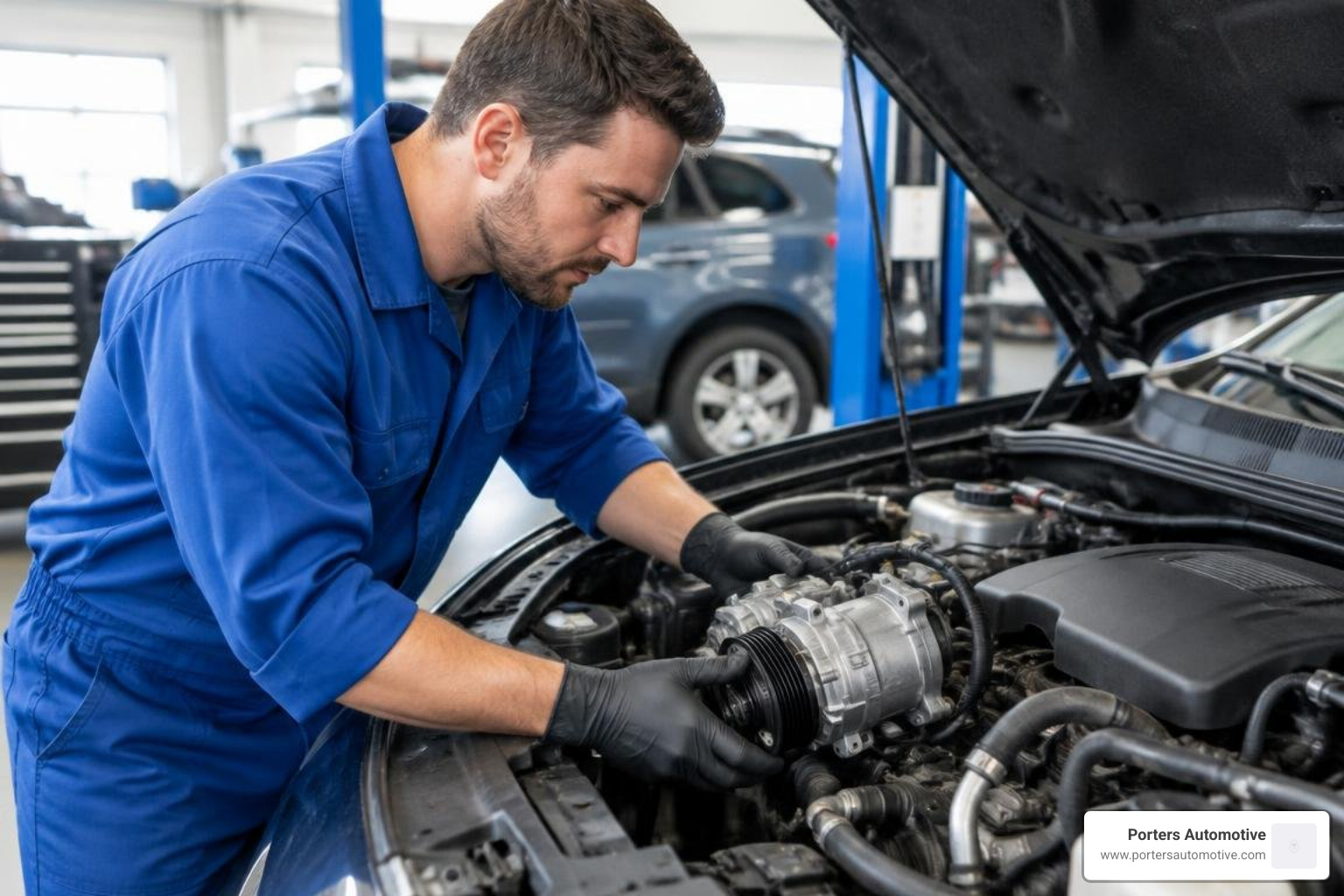
If your car’s AC blows warm air, start with checks you can do safely.
Set the AC to its coldest setting and the fan to high. Check whether air flows strongly from the vents, then inspect the cabin air filter for dirt. With the engine off, look for a worn belt or debris blocking the condenser at the front of the car. If airflow is strong but the air stays warm, book a diagnosis rather than adding refrigerant: a leak, fan problem, or compressor fault may be the cause.
I’m Heath Porter, owner of Porter’s Automotive in Tallahassee, and I’ve worked in automotive service since 2006. This guide to air conditioner repair for auto systems will help you sort out what you can check yourself and what needs a technician.
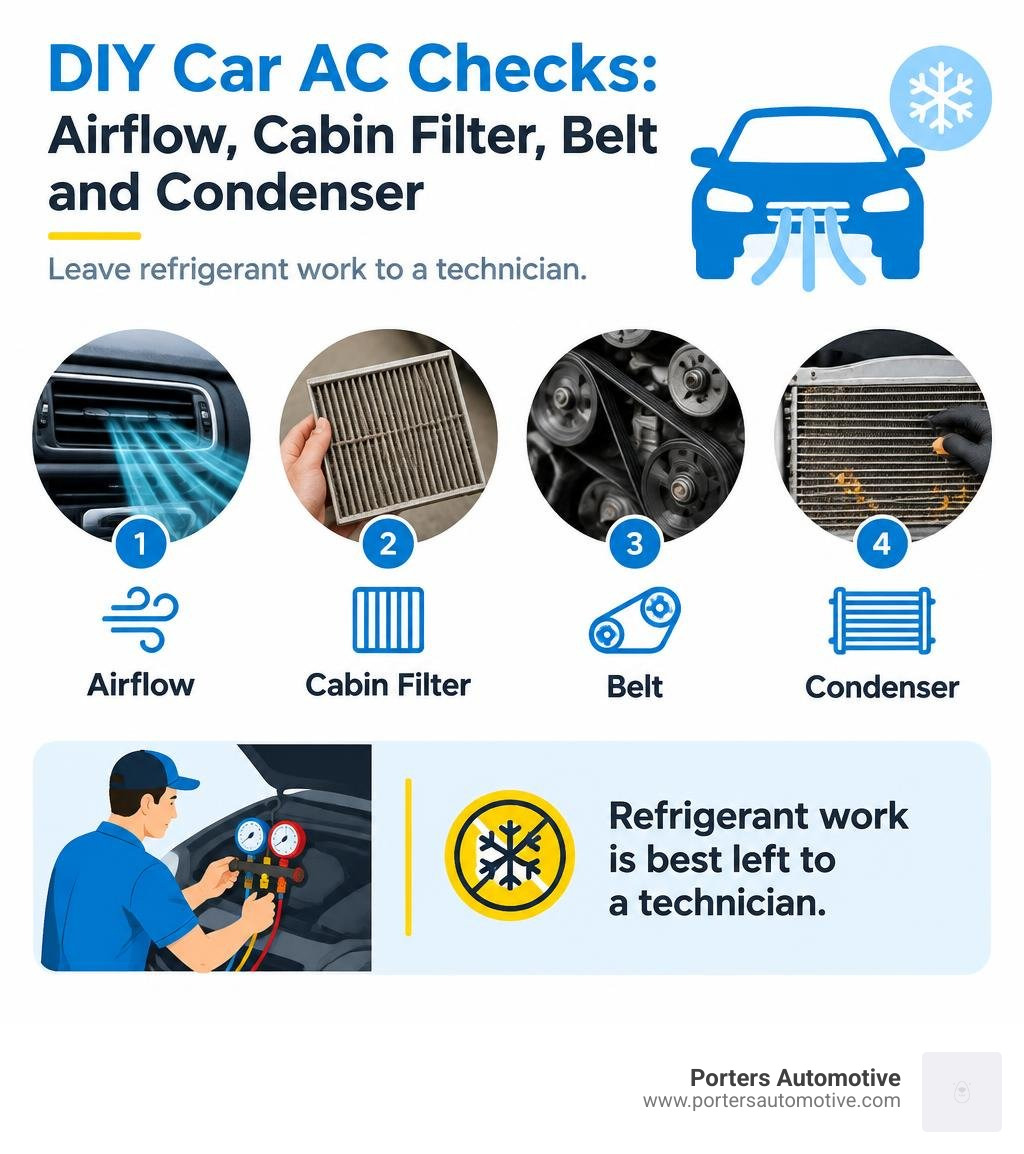
5 Common Warning Signs Your Vehicle AC System Is Failing
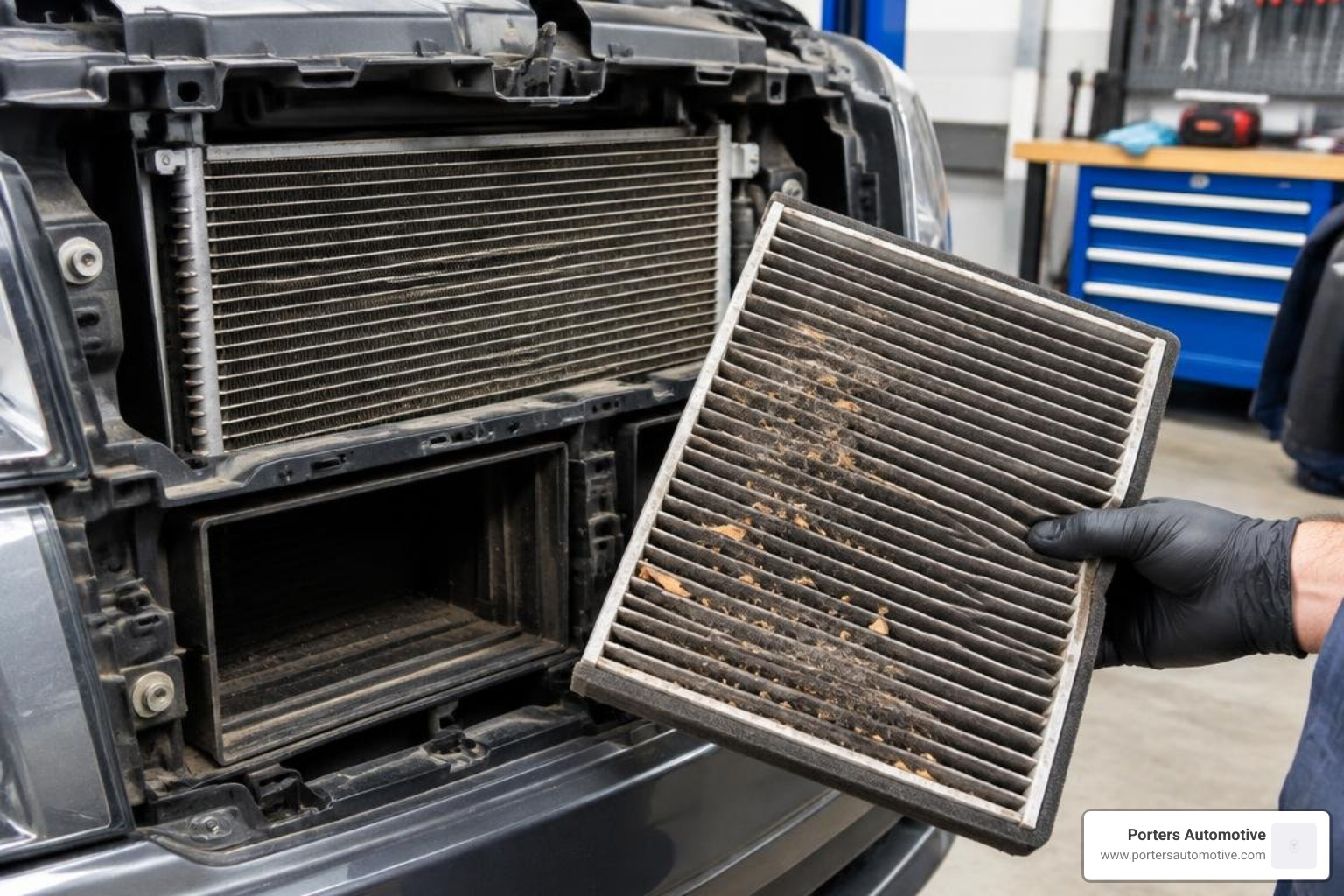
Modern automotive air conditioning systems are remarkably durable, but they operate under intense thermal stress and high pressures. Recognizing early warning signs can save you from an expensive cascade of component failures down the road.
Recognizing Airflow Restrictions and Odor Issues
- Weak or Diminished Airflow: When you crank the fan up to maximum and only feel a gentle breeze, the issue is almost always mechanical or physical airflow blockage. The most common culprit is a clogged cabin air filter packed with leaves, dust, and pollen. If replacing the filter does not restore velocity, the blower motor itself may be failing, or an internal blend door actuator inside your dashboard may be stuck.
- Musty, Mildew Odors: If turning on the vents treats your nostrils to the scent of a damp locker room, moisture has accumulated on the evaporator core. The evaporator sits in a dark, enclosed housing beneath the dashboard. As it pulls humidity out of the air, condensation drains out underneath the vehicle. If the drain tube clogs, stagnant water creates a breeding ground for mold and mildew.
Critical Mechanical and Electrical Failures
- Warm or Lukewarm Air: If the airflow is strong but fails to get cold, the system is either low on refrigerant due to an external leak, or the heat exchange process has stalled.
- Unusual Rattling, Grinding, or Squealing: Loud screeching noises when you switch on the AC typically point to a slipping serpentine belt or improper drive belt tension. Grinding or clicking noises coming from the engine bay often indicate that the internal bearings of the AC compressor are failing or the magnetic compressor clutch is slipping.
- Water Pooling in the Passenger Footwell: When condensation cannot escape through the exterior evaporator drain hose, it backs up into the HVAC box and overflows directly onto your vehicle’s interior carpeting, potentially damaging sensitive electronics and cabin flooring.
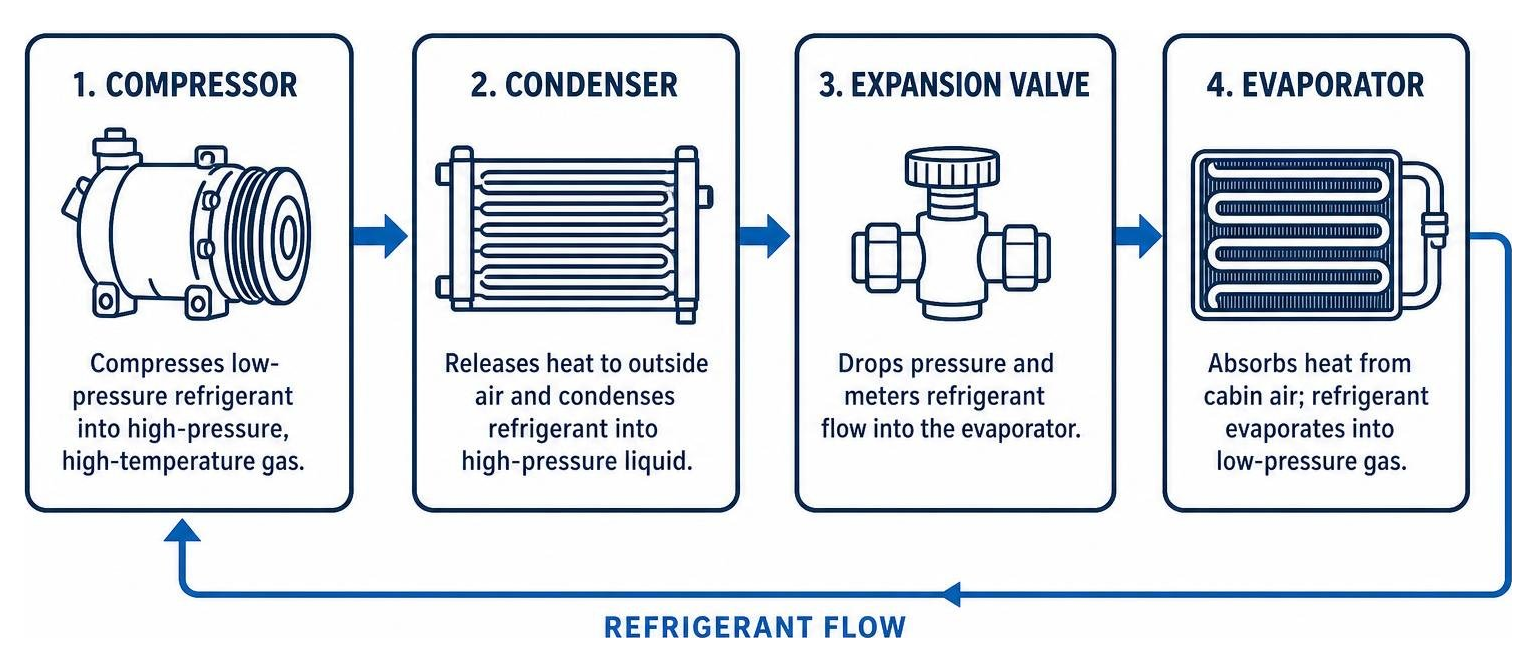
DIY Diagnostic Routine Before Attempting Air Conditioner Repair for Auto Systems
Before rushing out to buy replacement parts or chemical recharge cans, performing a structured visual and operational inspection helps pinpoint whether your cooling loss stems from basic electrical faults, airflow clogs, or sealed system failures.
Step-by-Step Air Conditioner Repair for Auto Diagnostics
Follow this methodical routine with your vehicle parked safely on level ground:
- Perform a Visual Under-Hood Check (Engine OFF): Inspect the serpentine belt driving the AC compressor for cracking, fraying, or slack. Look through the front grille at the AC condenser—check for bent cooling fins, caked mud, plastic bags, or road debris that prevents ambient air from cooling the hot refrigerant.
- Cabin and Blend Door Verification (Engine ON): Start the engine, turn the AC to MAX COOL, and cycle the temperature control from full hot to full cold. Listen closely behind the dash. You should hear the faint movement of the blend doors redirecting airflow. If the air stays hot regardless of setting, a broken blend door actuator is often the true problem rather than a broken refrigeration loop.
- Inspect the Compressor Clutch Engagement: With the AC switched on, look at the front of the AC compressor pulley. The outer clutch plate should snap inward and spin smoothly alongside the pulley. If the pulley spins but the center clutch remains stationary, the system may have disengaged the clutch due to a faulty electrical relay, a blown fuse, or a low-pressure safety switch triggered by a loss of refrigerant.
- Examine the Radiator and Condenser Cooling Fans: The electric cooling fans behind the radiator and condenser must spin whenever the AC is active. If the fans fail to run, the condenser cannot shed heat, causing high-side pressure to spike and leaving you with warm air at idle.
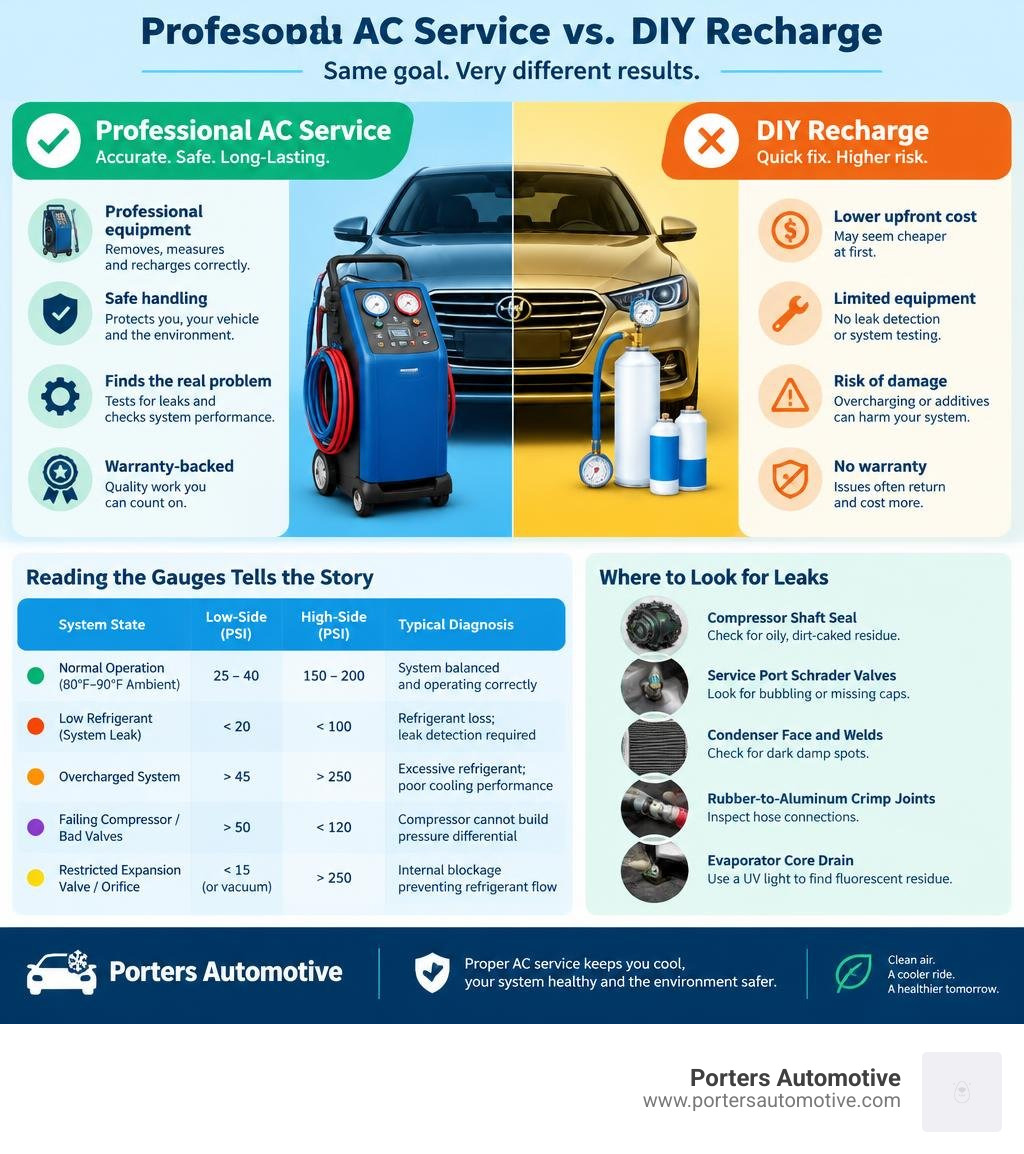
- Check Static and Operating Line Pressures: Using a dedicated manifold gauge set connected to the high- and low-pressure service ports, measure static pressure with the engine off, followed by dynamic pressure with the engine running and AC engaged.
| System State | Low-Side (PSI) | High-Side (PSI) | Typical Diagnosis |
|---|---|---|---|
| Normal Operation (80°F–90°F Ambient) | 25 – 40 | 150 – 200 | System balanced and operating correctly |
| Low Refrigerant (System Leak) | < 20 | < 100 | Refrigerant loss; leak detection required |
| Overcharged System | > 45 | > 250 | Excessive refrigerant; poor cooling performance |
| Failing Compressor / Bad Valves | > 50 | < 120 | Compressor cannot build pressure differential |
| Restricted Expansion Valve / Orifice | < 15 (or vacuum) | > 250 | Internal blockage preventing refrigerant flow |
Evaluating Refrigerant Levels and Detecting Leaks
Automotive air conditioning systems are hermetically sealed closed loops. Unlike engine oil, refrigerant is not consumed or “burned off” through normal operation. If your car is low on refrigerant, it has an active leak that must be repaired.
Passenger vehicles typically use between 28 and 32 ounces of refrigerant (roughly two to three standard 12-ounce cans). Depending on vehicle age, systems run on either older R134a or modern, environmentally friendly R1234yf refrigerant.
To trace a suspected leak without specialized recovery gear, inspect these high-vibration and connection points:
- Compressor Shaft Seal: Check the front snout of the compressor for oily, dirt-caked residue.
- Service Port Schrader Valves: Look inside the high- and low-pressure charging ports for bubbling or missing valve caps.
- Condenser Face and Welds: Check for small dark damp spots caused by airborne stone impacts puncturing delicate aluminum tubes.
- Rubber-to-Aluminum Crimp Joints: Examine flexible AC hoses where metal collars join rubber lines.
- Evaporator Core Drain: Check the condensate drain tube under the firewall for fluorescent residue using an ultraviolet (UV) inspection light.
Professional vs. DIY AC Service: Costs, Equipment, and Safety
While swapping a cabin filter or changing an AC relay is a great DIY task, handling refrigerant lines requires strict safety precautions and professional equipment. Modern vehicle systems are sensitive to within fractions of an ounce of refrigerant. Using over-the-counter recharge bottles with built-in stop-leak additives can cause severe internal contamination, gumming up delicate expansion valves and destroying expensive recovery machines. Maintaining strict professional standards ensures automotive systems run efficiently without releasing harmful compounds into the atmosphere.
Cost and Warranty Expectations for Air Conditioner Repair for Auto
Automotive AC repair costs vary depending on whether the issue requires a simple seal replacement or a complete system overhaul:
- System Diagnostics and Leak Test: $100 to $250
- Refrigerant Evacuation and Recharge: $150 to $300 (R134a) | $300 to $600 (R1234yf)
- AC Condenser Replacement: $400 to $900
- Compressor and Receiver-Drier Replacement: $800 to $1,800
- Evaporator Core Replacement (Dashboard Removal): $1,000 to $2,200
When choosing a repair facility, ensure their workmanship is backed by a dependable warranty. Industry-standard warranties typically range from 12 months/12,000 miles up to comprehensive 3-year/36,000-mile nationwide warranties on major parts and labor.
| Feature / Metric | DIY Can Recharge | Professional Repair Facility |
|---|---|---|
| Typical Cost | $30 – $60 | $150 – $1,200+ (issue dependent) |
| Leak Detection | Basic visual guess | UV Dye, Electronic Sniffers, Nitrogen Pressure |
| Moisture / Air Removal | None (traps air inside) | Deep Vacuum Pump (< 500 microns) |
| Refrigerant Charge Accuracy | Imprecise (gauge estimate) | Exact Digital Weight to Factory Specification |
| Warranty Protection | None (risk of part damage) | 12-Month to 36-Month Parts & Labor Warranty |
Mobile AC Technicians vs. Brick-and-Mortar Repair Facilities
When scheduling repairs, you will often find both mobile technicians and dedicated repair shops:
- Mobile AC Services: Excellent for on-site convenience at your home or workplace. They can perform system diagnostics, basic regassing, and top-side component replacements (like alternators or top-mounted hoses). However, their capabilities can be limited when jobs require heavy shop machinery, extensive electrical tracing, or complete dashboard removal for evaporator replacements.
- Brick-and-Mortar Facilities: Full-service auto shops have dedicated hydraulic vehicle lifts, specialized flush stations, and comprehensive recovery systems for both R134a and R1234yf platforms. This setup allows technicians to handle complex compressor seizures, flush metal debris from lines, and perform precise climate control calibration.
If your vehicle requires expert diagnostic attention, explore our complete vehicle services at Porter’s Automotive in Tallahassee.
Frequently Asked Questions About Auto Air Conditioning
Why is my car blowing hot air after adding refrigerant?
If you recently added a can of refrigerant and the vents still blow warm air, three common issues are usually responsible:
- Severe System Leak: If the leak is large, newly added refrigerant escapes almost instantly, preventing the system from building operating pressure.
- System Overcharging: Adding too much refrigerant increases pressure beyond safe operating thresholds. When this happens, high-pressure safety switches automatically shut down the compressor clutch to prevent mechanical failure.
- Air and Moisture Contamination: When an AC system drops to zero pressure, atmospheric moisture enters the lines. This moisture freezes inside the tiny orifice of the expansion valve, blocking refrigerant flow and causing the system to blow warm air within minutes of operation.
How does extreme outside temperature impact vehicle AC cooling?
A vehicle’s air conditioner does not create cold air; it absorbs heat from inside the cabin and dumps it into the ambient outside air through the front condenser. When outside temperatures soar past 95°F or 100°F, heat dissipation becomes much harder.
Under extreme external heat, head pressures rise significantly, forcing cooling fans to run at maximum output and reducing overall cooling efficiency at idle. Setting your climate controls to “Recirculate” reduces this thermal load by cooling already-chilled interior cabin air rather than pulling in scorching outside air.
How often does a vehicle air conditioning system need recharging?
Under ideal conditions, an automotive AC system should never need routine recharging. Because it is a sealed, closed-loop network of aluminum lines, rubber hoses, and O-ring seals, refrigerant remains inside indefinitely unless a physical leak develops.
However, because vehicle engines subject these components to continuous vibration, heat cycling, and road shocks, minor seepage past rubber seals can occur over several years. Having your AC system inspected every 2 to 3 years ensures proper lubrication of internal compressor seals and prevents unexpected cooling loss.
Conclusion
A malfunctioning air conditioning system turns daily commutes and summer road trips into uncomfortable, exhausting experiences. By executing a simple visual diagnostic routine—inspecting cabin filters, verifying compressor clutch engagement, clearing condenser obstructions, and checking cooling fan operation—you can easily catch minor maintenance issues before they turn into major repairs.
When your vehicle requires technical leak detection, vacuum evacuation, or major component replacement, trusting certified technicians ensures your vehicle is repaired safely and to exact factory specifications. For fast, reliable climate control diagnostics and complete automotive care, visit our team at Porter’s Automotive, or call 850.224.AUTO (2886). We will keep your vehicle running smoothly, comfortably, and reliably all year long.