October 2026 · Shop tips
What AC Servicing Charges Should You Expect?
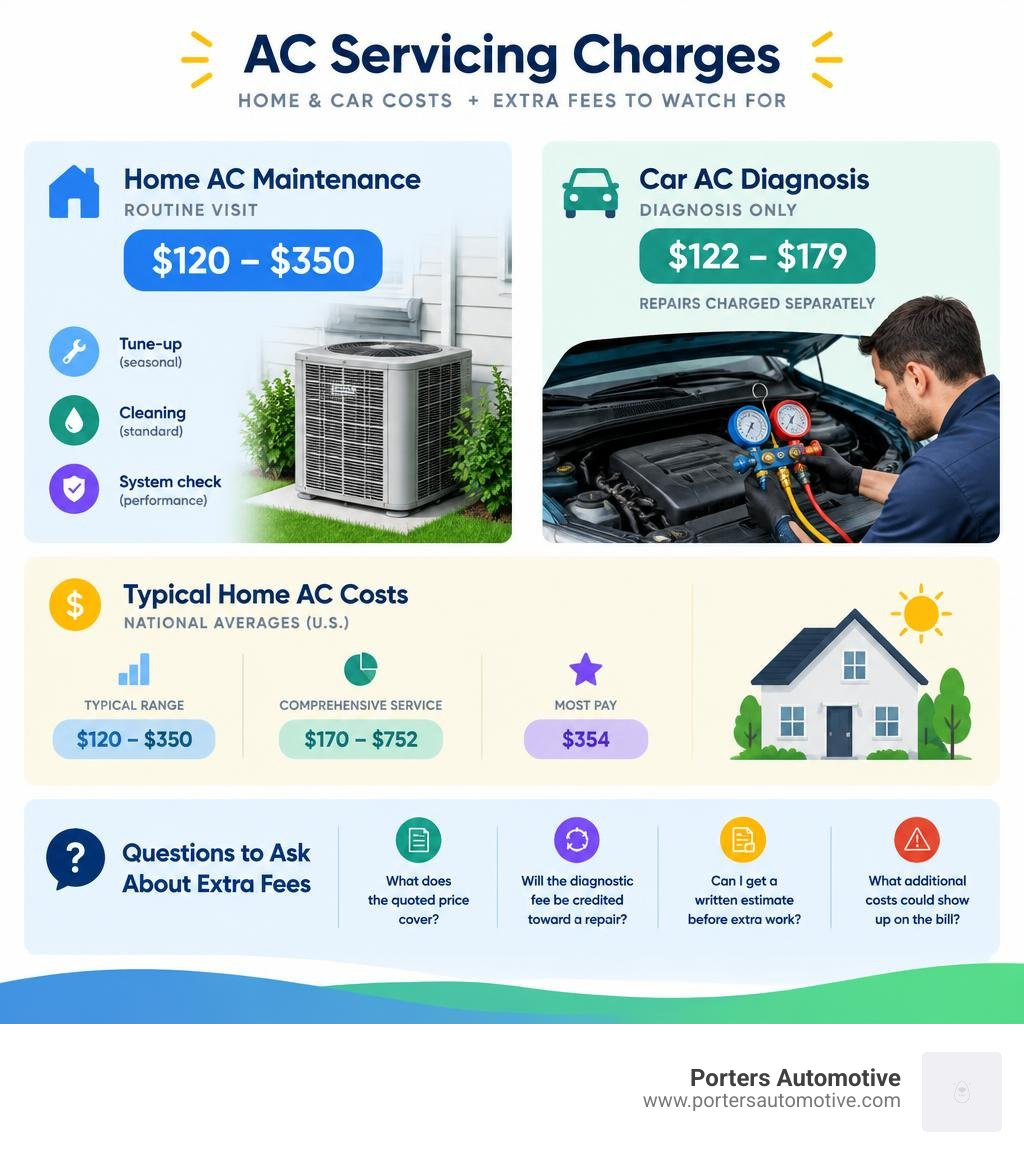
Budget $120-$350 for a routine home AC maintenance visit. For a car, an AC diagnosis typically costs $122-$179, with repairs charged separately. These are different services, so ask what the quoted price covers before you book. Confirm whether the diagnostic fee will be credited toward a repair, and request a written estimate before approving extra work.
A low service price can grow once parts, refrigerant, or added labor appear on the bill. This guide will help you spot those charges early and compare quotes with confidence.
I'm Heath Porter, owner of Porters Automotive. I've worked in automotive service since 2006, and I'll use that experience to explain how to review ac servicing charges before you commit to a repair.
Standard AC Servicing Charges and Cost Breakdown for 2026
When budgeting for cooling maintenance, the total price depends on whether you need a quick seasonal tune-up, an intensive deep clean, or an urgent emergency repair. Routine residential tune-ups across the United States typically range from $120 to $350, while the broader national average for comprehensive servicing falls between $170 and $752, with most property owners paying around $354.
In the automotive world, the average cost of vehicle A/C repair generally sits between $384 and $445, with specialized recharges averaging $285 to $369.
| Service Tier | Residential Systems (Split/Central) | Automotive A/C Systems | Common Inclusions |
|---|---|---|---|
| Standard Diagnostic Call | $75 – $125 | $122 – $179 | Pressure testing, electrical check, visual inspection |
| Routine Maintenance / Tune-Up | $120 – $350 | $150 – $250 | Filter check, basic coil rinse, drain clearing, test run |
| Deep Jet Clean / Chemical Wash | $100 – $300 | $180 – $320 | High-pressure coil cleaning, casing wash, chemical flush |
| Refrigerant Recharge | $200 – $500 | $285 – $369 | Evacuation, leak dye test, factory-spec gas refilling |
| Major Component Repair | $400 – $2,500+ | $384 – $800+ | Compressor replacement, coil repair, motor swap |
| Emergency / After-Hours Call | $150 – $300 (Diagnostic base) | N/A (Standard shop rates) | Priority dispatch, immediate weekend or night labor |
Understanding Routine vs Deep Clean AC Servicing Charges
A basic tune-up is designed for preventive upkeep. Technicians clear away surface dirt, inspect electrical terminals, replace basic filters, and measure static pressure.
In contrast, a deep jet clean or chemical wash involves dismantling the air handler casing to treat severely clogged evaporator coils, cleaning out sludge from the drainage pan, and using pressure washers or chemical foaming agents to strip away grime. While a routine tune-up costs around $70 to $120 in basic labor packages, deep chemical treatments range from $100 to $300 because they take twice as long and require dedicated chemical solvents.
Global and Regional Cost Variations
Cooling labor rates and service structures differ worldwide based on climate demands, equipment styles, and regulatory mandates.
- United States: Technicians typically bill between $65 and $150 per hour. Routine maintenance visits range from $120 to $350, with average repairs totaling around $300 for parts and labor.
- India: Residential rates vary by equipment setup. For split systems, standard maintenance runs ₹349 to ₹699, window units cost ₹399 to ₹599, and comprehensive jet cleans run ₹599 to ₹999, as detailed in the International AC Service Pricing Guide. Gas refilling ranges from ₹2,000 to ₹3,500.
- Singapore: General single-unit servicing averages $22 to $50 SGD, while chemical overhauls cost $88 to $150 SGD. Gas top-ups run between $80 and $150 SGD depending on refrigerant type.
- Dubai (UAE): Basic split AC servicing runs 315 to 385 AED, while central AC deep cleaning ranges from 320 to 580 AED depending on system tonnage.
- Australia: Standard attendance fees start around $235 AUD (covering site assessment and the first hour of labor), with additional split systems costing $105 AUD and dedicated coil cleaning adding $110 AUD per unit, as outlined in the Coldaz Air Conditioning & Heating Service Guide.
Common Diagnostic Fees, Component Repairs, and Hidden Costs
Service Call Fees and Diagnostic Policies
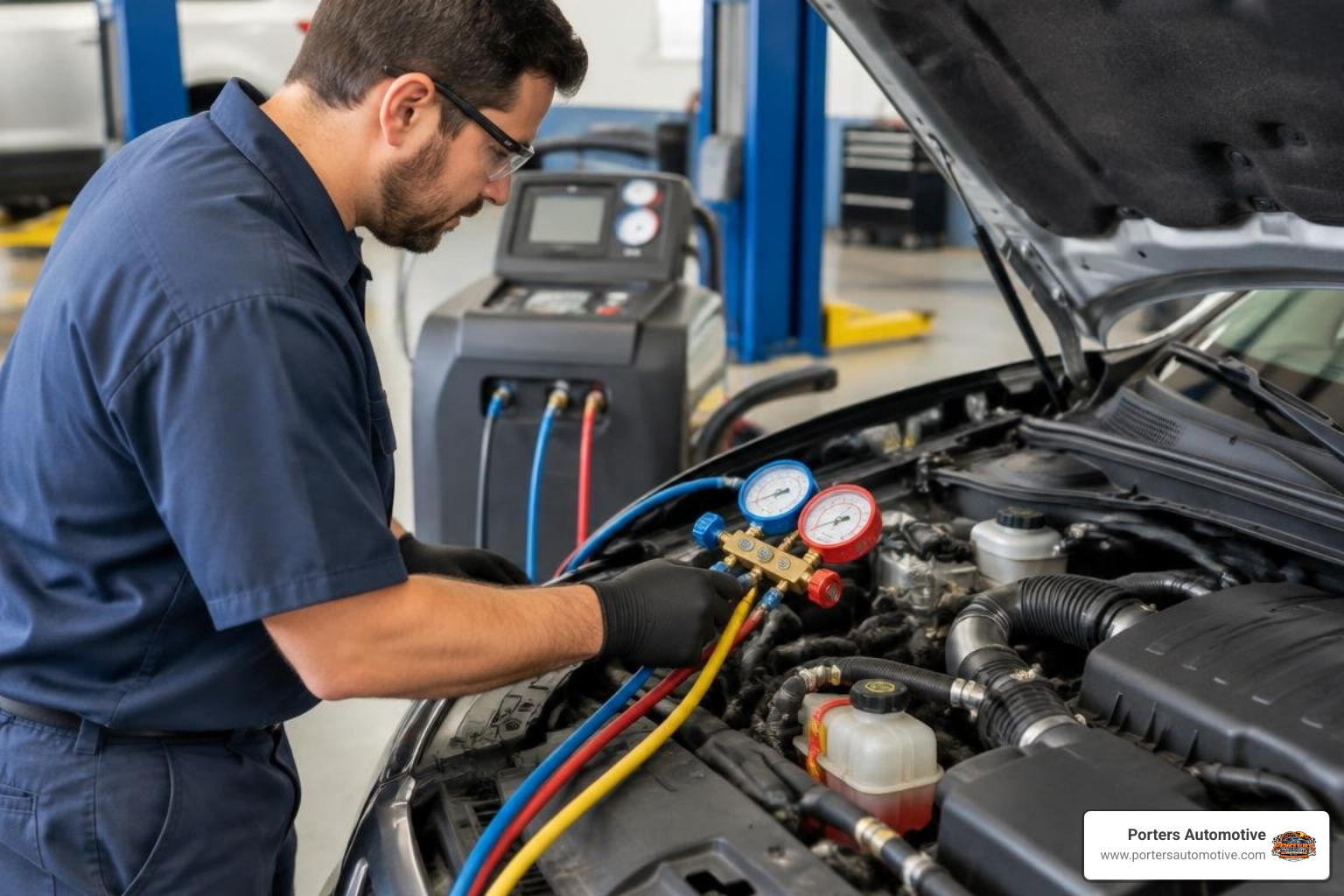
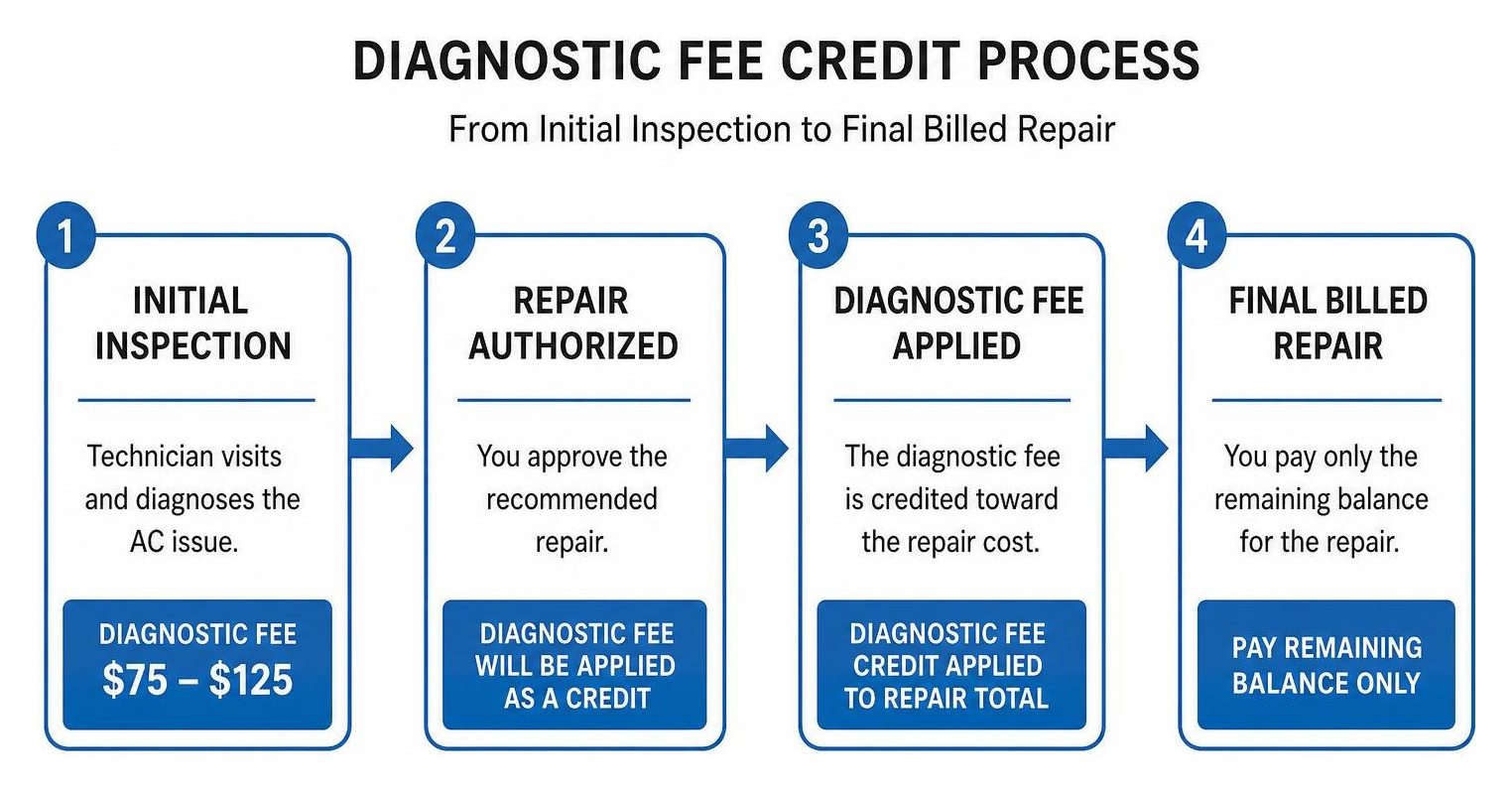
When an air conditioner acts up, most contractors and repair facilities charge an initial diagnostic or trip fee. For residential home systems, standard diagnostic fees run $75 to $125, though emergency or after-hours calls jump to $150 to $300. In automotive service, an A/C system diagnosis typically runs between $122 and $179 in dedicated labor.
Always check whether the shop or technician waives this diagnostic fee when you authorize the recommended repair. Reputable service providers often apply the diagnostic charge as a credit toward the final repair bill, saving you from paying twice for the same visit.
Typical Repair Costs for Key AC Components
Minor electrical and airflow issues make up over 60% of all service calls. When major mechanical parts fail, replacement costs climb rapidly:
- Run/Start Capacitor Replacement: $100 – $400. Capacitors provide the initial electrical boost to start your blower motor and compressor. They wear out frequently from electrical surges and intense heat.
- Contactor Replacement: $130 – $250. This electromechanical switch controls voltage flow to your compressor and outdoor fan.
- Blower or Condenser Fan Motor: $100 – $700 (Residential) or $220 – $320 (Automotive/Mini-Split). A failing motor leads to poor airflow, system overheating, and frozen coils.
- Refrigerant Leak Detection and Repair: $200 – $1,600+. Pinpointing a pinhole leak with nitrogen or UV dye is labor-intensive. Soldering the leak and recharging the line sets the total cost based on accessibility.
- Compressor Replacement: $1,500 – $3,000+ (Residential Central AC) or $400 – $800+ (Automotive). As the mechanical heart of the cooling system, replacing a locked compressor requires complete system flushing, filter-drier replacement, and a full refrigerant recharge.
Key Factors Driving Maintenance Pricing
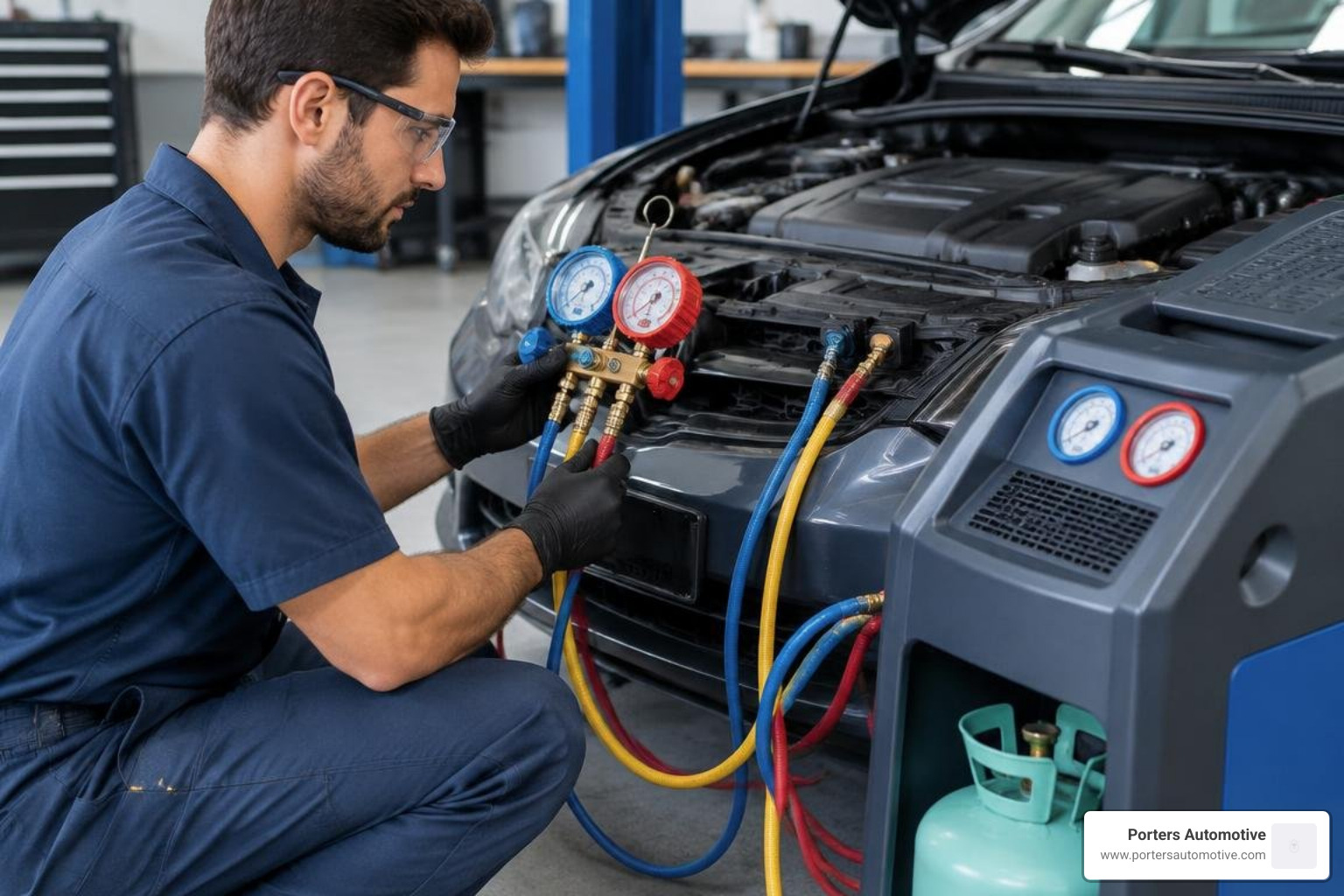
Factors That Influence Residential and Automotive AC Servicing Charges
The final figure on your invoice is shaped by five major real-world factors:
- Labor Rates & Technician Certification: Certified master technicians command $75 to $150 per hour. Specialized equipment, such as automotive recovery carts or vacuum micron gauges, requires professional training to operate safely.
- Seasonality and Dispatch Timing: Peak summer heat waves create massive service backlogs. Booking during extreme demand often comes with emergency dispatch premiums of 50% to 100%. Conversely, scheduling maintenance in mild spring or autumn windows can yield off-peak discounts of 15% to 25%.
- Accessibility: If an evaporator coil is stuffed into a cramped crawlspace, or an automotive expansion valve sits deep behind a vehicle's dashboard, the extra labor time will increase the final bill.
- Refrigerant Recovery Compliance: Under federal environmental laws, refrigerants cannot be vented into the atmosphere. Technicians must mechanically recover, filter, and recycle the refrigerant, adding specialized equipment labor to the invoice.
System Size, Tonnage, and Refrigerant Types
System capacity directly impacts replacement part pricing and material volumes. A 5-ton central system requires substantially more refrigerant and larger electrical components than a 1.5-ton split unit.
Refrigerant chemical types also carry very different price tags:
- R-22 (Freon): Phased out due to environmental regulations. Remaining virgin and reclaimed stock is scarce, making R-22 top-ups exceptionally expensive ($100 to $200+ per pound).
- R-410A: The modern standard for residential systems over the past decade, priced moderately ($40 to $80 per pound).
- R-32 & R-454B: Newer eco-friendly refrigerants with lower global warming potential that require certified handling equipment.
- R-134a & R-1234yf: In automotive systems, traditional R-134a remains budget-friendly, while newer vehicles using R-1234yf face higher initial gas prices due to manufacturing costs and updated recovery requirements.
How to Avoid Unnecessary Costs and Maintenance Pitfalls
- Insist on Upfront, Flat-Rate Pricing: Avoid vague estimates that charge open-ended hourly rates without a clear scope of work. Always demand a written quote detailing parts, labor, and shop fees before work begins.
- Verify Licensing, Certification, and Insurance: Never hire uncertified handymen to handle pressurized refrigerant circuits. Improper charging can permanently damage your compressor.
- Never Pay for "Stop-Leak" Additives: Chemical sealants are temporary fixes that can clog internal expansion valves, gum up recovery machinery, and cause catastrophic compressor failures.
- Insist on Leak Repair Before Recharging: Adding refrigerant to a leaking system is a waste of money. Ensure the technician locates and repairs the physical leak point before refilling the circuit.
Evaluating Annual Maintenance Contracts (AMCs)
Residential maintenance agreements generally cost between $120 and $350 per year. For automotive owners, routine multi-point inspections serve a similar purpose.
A well-structured agreement delivers noticeable financial returns:
- Priority Dispatch: Jump to the front of the queue during severe heat waves.
- Automatic Part Discounts: Most maintenance plans provide 10% to 15% discounts on all unexpected repairs.
- Extended System Longevity: Regular coil cleanings and electrical tightening prevent minor wear from cascading into a major mechanical breakdown.
The 10-Year Rule: When to Repair vs Replace
When facing a repair quote that exceeds $1,000, use the industry-standard 10-Year Rule to make an informed choice.
If your air conditioning unit is over 10 to 12 years old, uses obsolete R-22 refrigerant, and the estimated repair cost exceeds 50% of the price of a modern replacement, replacing the unit is almost always the more economical path. Aging compressors lose mechanical efficiency, and investing thousands into an obsolete unit often delays an unavoidable system replacement.
Frequently Asked Questions About AC Service Fees
What is included in a standard AC tune-up checklist?
A comprehensive professional tune-up should always include:
- Calibrating thermostat settings and testing cycling controls
- Tightening all electrical terminals, relays, and capacitors
- Measuring blower motor amp draws and testing operating voltage
- Inspecting, rinsing, or chemically cleaning condenser and evaporator coils
- Clearing and flushing the condensate drain line to prevent overflow damage
- Measuring system refrigerant levels and checking line-set temperatures
- Inspecting or replacing primary air filtration media
Are AC diagnostic call fees usually waived if repairs are made?
Most reputable HVAC and automotive repair providers credit or waive the diagnostic fee if you approve the necessary repairs during the same visit. Always ask your service advisor about their diagnostic credit policy before authorizing the initial inspection.
How often should an air conditioning system receive professional servicing?
Residential cooling systems should receive professional maintenance once a year, ideally in early spring before the peak cooling season. In hot, humid climates, semi-annual maintenance (cooling checks in spring and heating inspections in autumn) helps maintain system efficiency.
For vehicles, have your A/C pressures, cabin air filters, and cooling fans checked every 12 to 24 months, or immediately if you notice reduced airflow, odd odors, or a lack of cold air.
Honest, Professional Cooling Service You Can Count On
Understanding the charges behind air conditioning maintenance protects your wallet and keeps your cooling equipment running reliably through the hottest summer months. Whether you are budgeting for seasonal home HVAC check-ups or keeping your vehicle's climate control system blowing ice-cold, avoiding hidden fees comes down to upfront pricing, clear diagnostic terms, and trusted technicians.
If your vehicle's air conditioner is blowing warm air, making strange noises, or overdue for a seasonal inspection, visit Porters Automotive across our locations in Tallahassee, Quincy, and Bradfordville, FL. Our certified technicians provide straightforward diagnostics, clear written estimates, and expert automotive repairs to keep you comfortable on the road.