November 2026 · Brakes
Brake Repair: When to Act and What It May Cost
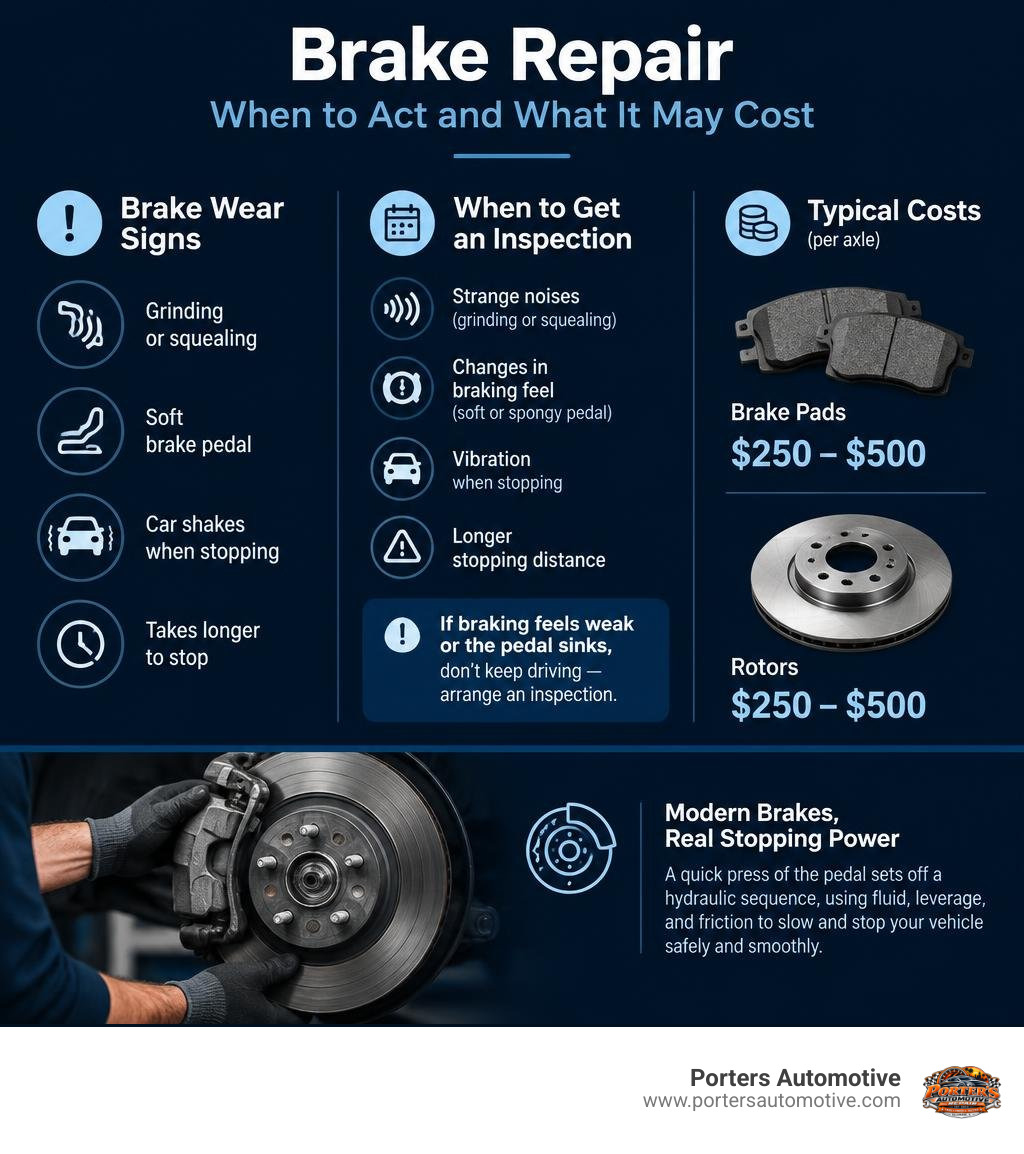
Get your brakes checked if they grind or squeal, the pedal feels soft, the car shakes when stopping, or it takes longer to stop. Brake repair may mean replacing worn pads, servicing rotors, or fixing another part of the system. Pads and rotors typically cost $250 to $500 per axle to replace, but your vehicle and the parts it needs will determine the quote. If braking feels weak or the pedal sinks, don't keep driving; arrange an inspection.
I'm Heath Porter, owner of Porters Automotive in Tallahassee. I've worked in automotive service since 2006, and I'll use that experience to explain brake repair costs, warning signs, and what to expect from a shop.
Understanding How Modern Automotive Brakes Function
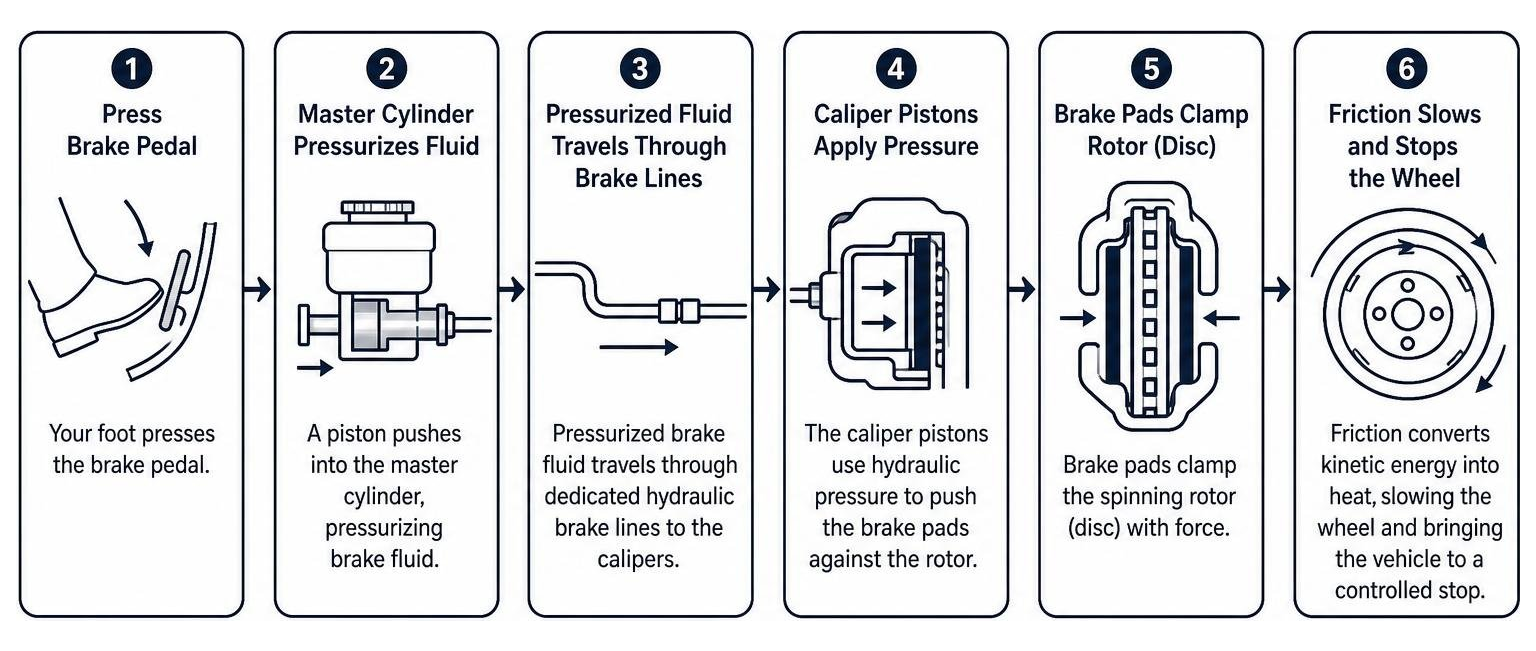
When you press down on the brake pedal, you are initiating a powerful hydraulic sequence engineered to bring thousands of pounds of moving metal to a controlled stop. That smooth deceleration relies on fluid physics, mechanical leverage, and friction materials working in sync.
When your foot presses the pedal, a piston pushes into the master cylinder, pressurizing brake fluid throughout dedicated hydraulic brake lines. This pressurized fluid travels directly to the brake calipers mounted at each wheel. The calipers house hydraulic pistons that squeeze the brake pads against the flat, spinning surfaces of the brake rotors (discs). The resulting friction converts your vehicle's kinetic energy into intense heat, slowing the rotation of the wheels and bringing your car to a halt.
Because this system relies heavily on friction and hydraulic pressure, routine brake pad replacement and rotor services are fundamental to maintaining road safety and keeping your stopping distances short.
Brakes vs. Brake Pads: What Is the Difference?
Drivers often use the words "brakes" and "brake pads" interchangeably, but they refer to two different things:
- The Brake System: This refers to the entire mechanical and hydraulic assembly. It encompasses the master cylinder, brake lines, calipers, wheel cylinders, brake drums (found on the rear of some older or light-duty vehicles), rotors, fluid, and electronic sensors.
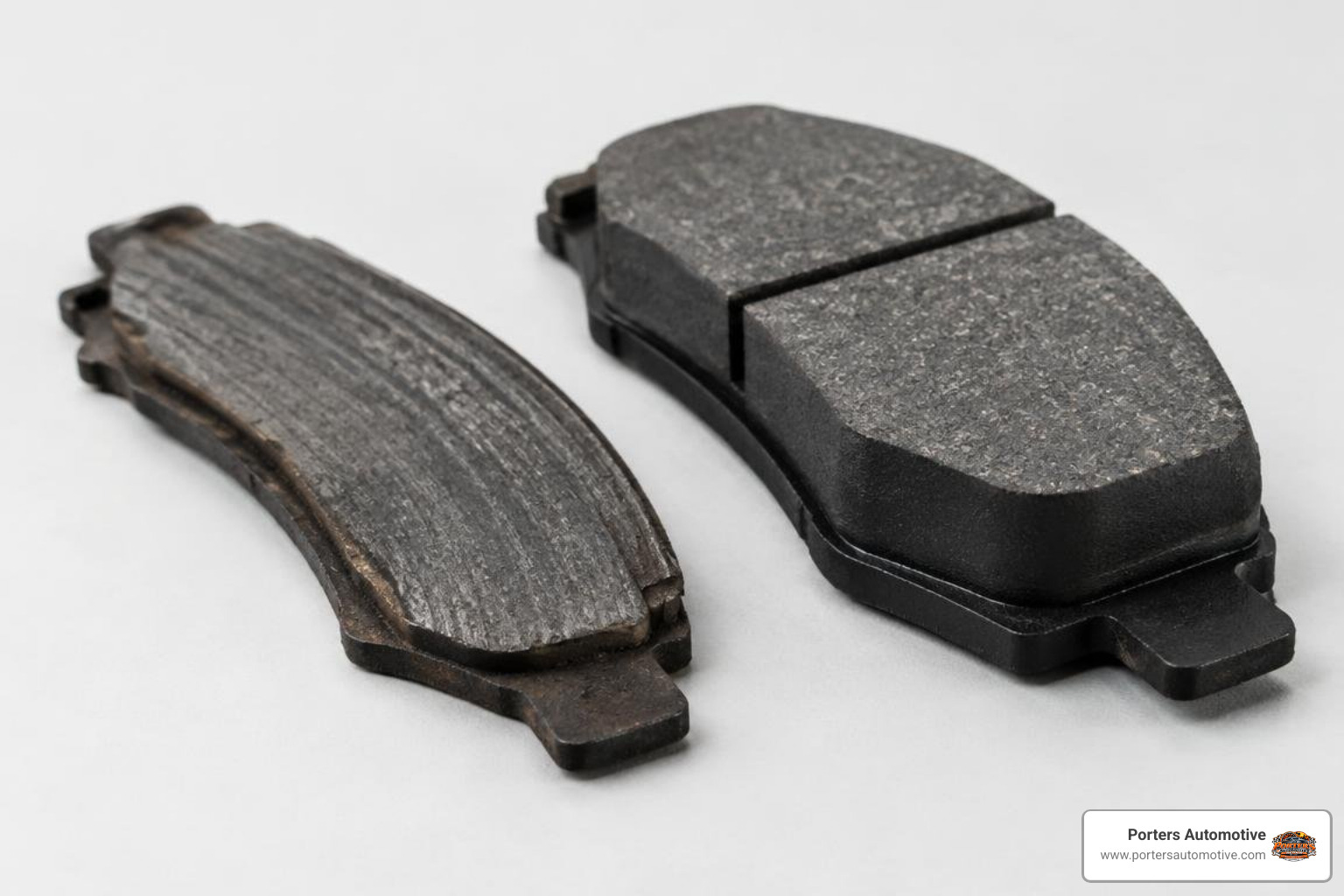
- Brake Pads: These are specifically the consumable friction blocks housed inside the calipers. Made of specialized friction materials bonded to steel backing plates, they take the direct thermal and abrasive beating every time you decelerate.
While brake pads are designed to wear down and be replaced regularly, the clamping mechanism, hydraulic components, and metal rotors require ongoing inspection to prevent uneven rotor wear and system failure.
Hydraulic Lines and Power Assist Systems
Brake fluid cannot compress under normal operating conditions, making it an exceptional medium for transferring force. However, over time, moisture and contaminants compromise this fluid, lowering its boiling point and degrading internal seals. Regular brake fluid flushes prevent internal corrosion and vapor lock.
Modern vehicles also rely on a vacuum-assisted or electronic brake booster to multiply the mechanical force of your foot. If you experience a rock-hard pedal that requires immense physical effort to press, the power-assist assembly is likely failing. Before replacing major hardware, it pays to check the simple causes of brake booster issues, such as vacuum leaks. In many cases, you can test the brake booster check valve before investing in an entirely new booster assembly.
Critical Warning Signs You Need Brake Repair
Your braking system provides clear warning signals before complete mechanical failure occurs. Recognizing these signs early protects your vehicle and helps you avoid costlier repairs down the road.
Pay attention to these sensory warning signs:
- Spongy or Soft Pedal: If the pedal sinks closer to the floorboard than usual or feels like stepping on a wet sponge, air has likely entered the hydraulic lines or the master cylinder is bypassing fluid internally.
- Vehicle Pulling to One Side: If your car pulls left or right when braking, you may have a sticking caliper slide pin, a seized caliper piston, or uneven pad wear across the axle.
- Visible Wear Below 1/4 Inch: Looking through your wheel spokes, you should see the outer pad pressed against the rotor. If the friction material is thinner than 1/4 inch (roughly 3 to 4 millimeters), schedule a replacement.
- Clear-to-Yellow Fluid Leaks: An oily, clear-to-amber puddle near your wheels or under the engine bay indicates a leaking brake line, caliper seal, or master cylinder reservoir.
- Dashboard Warnings: An illuminated ABS light or red brake warning light signals electronic sensor faults, hydraulic pressure loss, or low fluid levels.
- Burning or Smoky Odor: A sharp chemical or burning smell after moderate driving indicates an overheated brake pad, frequently caused by a caliper that has seized and is dragging against the rotor.
Why Are My Brakes Squeaking and Grinding?
Brake noises are among the most common customer complaints we evaluate in our repair bays.
A high-pitched squeal is often caused by metal wear indicators. These are small, semi-flexible steel tabs attached to the brake pad backing plate. When the friction material wears down to its critical limit, the metal tab contacts the spinning rotor surface. It produces an intentional, audible squeal to notify you that service is due before major metal-on-metal damage occurs.
Light squeaking early in the morning can also result from overnight moisture and a thin layer of surface rust on the rotors, which brushes off after a few stops.
However, if you hear a harsh, metallic grinding noise, your friction material is completely depleted. The steel backing plate is now clamping directly into the cast iron rotor. This causes deep rotor grooving, compromises stopping power, and requires immediate mechanical intervention.
Why Does the Steering Wheel Shake When Braking?
If your steering wheel shivers or the brake pedal pulses when you decelerate from highway speeds, you are experiencing brake judder.
This vibration is commonly caused by:
- Warped Brake Discs: Excessive heat cycles, hard stops, or uneven cooling can distort the flat profile of the rotor disc.
- Uneven Friction Material Deposits: If pads get overheated, uneven layers of friction material transfer onto the rotor surface, creating high and low spots.
- Worn Hubs or Alignment Issues: Loose wheel bearings, worn steering tie rods, or misaligned suspension geometry can amplify minor rotor imperfections into severe steering wheel shaking.
Comprehensive Breakdown of Brake Service and Replacement Costs
Brake service pricing depends on your vehicle's make, weight class, drivetrain configuration, and the replacement friction materials you select.
According to automotive industry data and benchmarks from Kelley Blue Book, standard brake pad replacement averages $150 to $300 per axle, while replacing both pads and rotors typically ranges from $250 to $500 per axle. For a complete four-wheel brake service covering pads, rotors, and hardware, total costs generally land between $500 and $1,000.
| Vehicle Model | Estimated Brake Pad Replacement Cost | Typical Service Scope |
|---|---|---|
| Ford F-150 | $246 – $303 | Front or Rear Axle Set |
| Honda CR-V | $264 – $321 | Front or Rear Axle Set |
| Honda Civic | $271 – $328 | Front or Rear Axle Set |
| Honda Accord | $291 – $349 | Front or Rear Axle Set |
| Toyota Corolla | $297 – $355 | Front or Rear Axle Set |
| Toyota Camry | $304 – $368 | Front or Rear Axle Set |
| Chevrolet Silverado 1500 | $361 – $430 | Front or Rear Axle Set |
| Nissan Altima | $382 – $444 | Front or Rear Axle Set |
Note: Across the broader repair sector, average professional labor charges range between $122 and $179 per axle, with replacement friction parts generally pricing between $213 and $215.
Brake Pads vs. Rotors: Pricing Breakdown
When calculating your brake repair budget, it helps to understand what goes into each component:
- Pads-Only Service ($150 – $300 per axle): If your rotors are well above minimum thickness specifications, free of deep scoring, and perfectly flat, a technician may be able to install new pads after cleaning and lubricating the caliper assembly.
- Pads and Rotors Combined ($250 – $500 per axle): In modern passenger vehicles, rotors are manufactured thinner to save unsprung weight. As a result, they frequently wear down alongside the pads. Replacing both ensures a smooth friction mating surface, eliminates noise, and restores factory stopping power.
- Hydraulic Calipers and Hoses ($150 – $450+ per wheel): If an internal piston seal fails, the bleeder screw strips, or slide pins freeze, replacing the hydraulic caliper assembly will add to your overall repair total.
Comparing Friction Materials: Organic, Semi-Metallic, and Ceramic
Choosing the right friction material depends on your driving habits, vehicle demands, and budget:
- Organic (Non-Asbestos Organic - NAO): Made from bonded fibers like rubber, glass, and resin. They provide quiet operation and soft pedal engagement at an economical price point. However, they wear out faster, generate noticeable black dust, and suffer thermal fade under heavy loads.
- Semi-Metallic: Formulated with 30% to 65% steel, copper, or iron powder combined with graphite lubricants. They offer excellent heat dissipation, firm pedal response, and long-lasting durability for trucks, towing applications, and spirited driving. They can be slightly noisier and accelerate rotor wear.
- Ceramic: Blended from dense ceramic compound fibers and copper filament flakes. They produce light-colored dust that does not easily stick to wheels, operate quietly across broad temperature ranges, and offer long service life for commuter sedans and SUVs.
- Carbon-Ceramic: Reserved for exotic, ultra-high-performance sports cars. These specialized systems resist extreme track temperatures but can cost upwards of $15,000 for full axle replacement.
Professional Maintenance Procedures and Safety Considerations
Braking systems are your vehicle's most critical active safety equipment. While seasoned DIY mechanics can swap pads at home, professional service ensures that every component meets strict manufacturer tolerances and safety guidelines.
What to Expect During a Professional Brake Repair Service
A comprehensive brake repair follows a methodical multi-step process:
- Lifting and Wheel Removal: The vehicle is securely raised on an automotive lift, and the wheels are removed to expose the full suspension and brake assembly.
- Inspection and Measurement: Technicians measure rotor thickness and runout using micrometers and dial indicators to determine if discs can be resurfaced or must be replaced.
- Caliper and Hardware Servicing: The caliper is unbolted and suspended safely—never hung by the flexible rubber brake hose. Slide pins are cleaned, inspected for pitting, and greased with high-temperature silicone brake lubricant.
- Rotor and Hub Preparation: Wheel hub mating faces are cleaned of rust and scale to ensure the new rotor sits true. Rotors are cleaned with solvent to eliminate anti-corrosion shipping oils.
- Pad Installation in Axle Pairs: High-grade friction pads are installed in complete axle pairs (both front or both rear wheels) to maintain balanced braking side-to-side.
- Fluid Protection: Keeping grease, road grime, and petroleum fluids away from friction pads is crucial; any fluid contamination permanently ruins the friction surface.
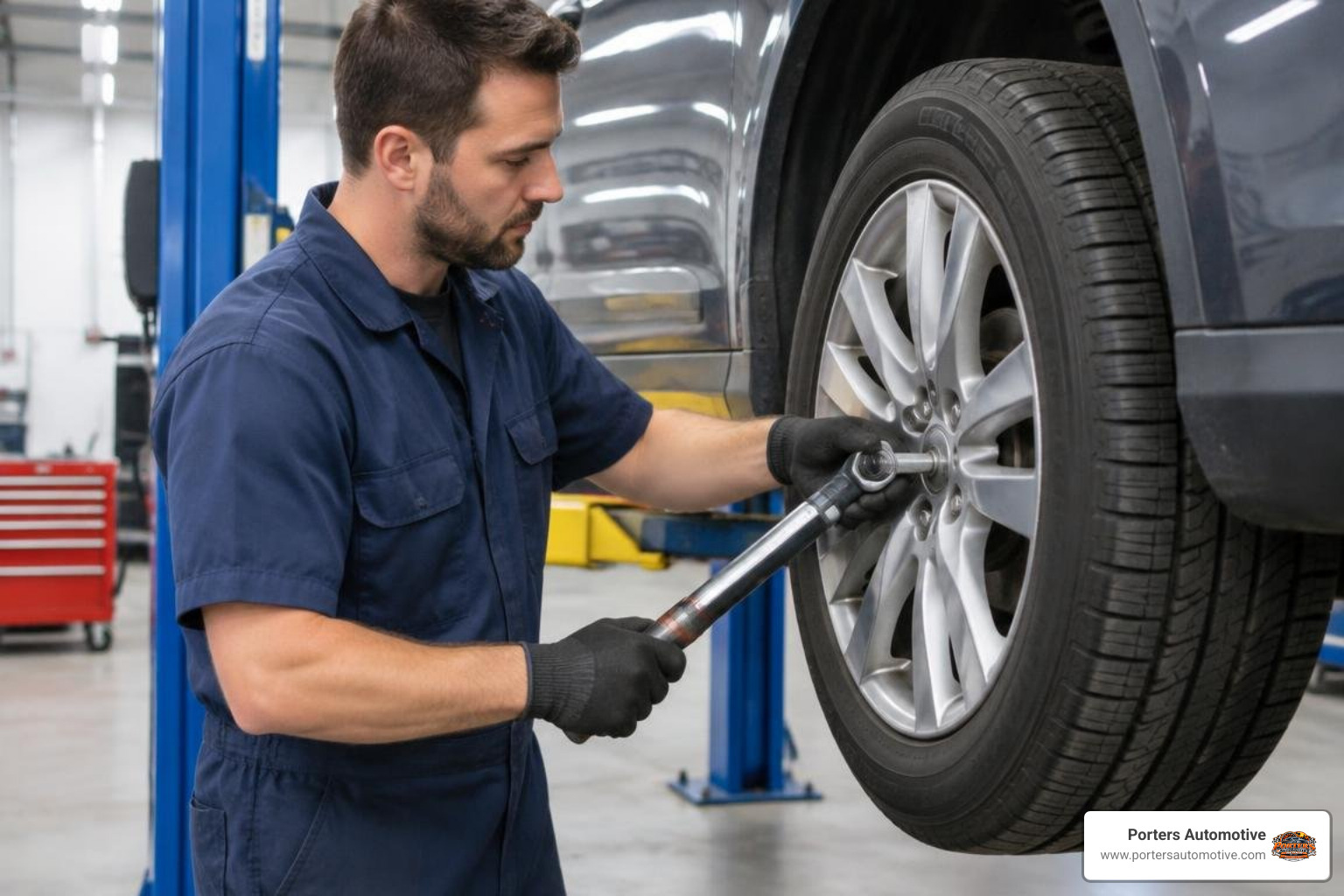
- Final Assembly and Torque Specs: Wheels are reinstalled, and lug nuts are hand-torqued using a calibrated torque wrench to the exact manufacturer specification to avoid warping the fresh rotors.
The Dangerous Consequences of Driving With Worn Brakes
Putting off brake maintenance puts you, your passengers, and other drivers at risk.
- Extended Stopping Distances: As friction material overheats and thins, your vehicle takes significantly more asphalt to come to a complete stop, increasing collision risk.
- Catastrophic Rotor Failure: Worn pads allow steel backing plates to gouge and overheat the rotor disc, which can cause the rotor to crack or shatter under emergency braking.
- Caliper Piston Overextension: When pads and rotors wear past minimum thickness, caliper pistons must push out further. This can cock the piston in its bore, tear the rubber dust boot, leak hydraulic fluid, or cause total brake pressure loss.
- Irregular Tire Wear: A dragging caliper or uneven braking force forces one tire to scrub harder against the road, wearing out tread prematurely.
Brake Lifespan, Inspection Schedules, and Driving Habits
Under normal driving conditions, brake pads last between 25,000 and 70,000 miles, with an industry average hovering around 40,000 miles. Rotors frequently last through two sets of pads if maintained properly, but real-world lifespan varies depending on several factors.
Essential Factors That Affect Brake Repair Longevity
- Driving Habits: Drivers who accelerate aggressively toward red lights and brake hard wear through pads twice as fast as conservative drivers who anticipate traffic and coast to slow down.
- Stop-and-Go Commutes: Constant urban traffic in places like downtown Tallahassee or Quincy creates continuous friction cycles and elevated heat compared to steady highway driving.
- Vehicle Payload and Towing: Hauling heavy cargo, work tools, or towing trailers places immense thermal stress on the friction components, requiring more frequent pad changes.
- Environmental Exposure: Road grit, humidity, and standing water accelerate surface corrosion on exposed rotor faces and caliper slides.
Recommended Inspection Schedules and Best Practices
To avoid unexpected repairs and keep your vehicle running safely, follow these maintenance best practices:
- Inspect Brakes Every 12 to 18 Months: Have a qualified technician measure pad thickness and inspect hydraulic lines at least once a year, or during every tire rotation (roughly every 5,000 to 7,500 miles).
- Flush Fluid Every 2 to 3 Years: Replace brake fluid according to manufacturer time limits to prevent internal moisture accumulation and protect ABS valves.
- Maintain Complete Service Records: Documenting on-time brake work preserves your vehicle's mechanical health and strengthens private resale or trade-in value.
Frequently Asked Questions About Brake Maintenance
How long do brake pads typically last on average?
Most passenger vehicle brake pads last around 40,000 miles. If you drive primarily on open highways with gentle deceleration, high-quality ceramic pads can last up to 70,000 miles. Conversely, heavy stop-and-go commuting, steep downhill driving, or frequent towing can wear pads down in 25,000 miles or less.
How much does it cost to replace both brake pads and rotors?
Replacing both pads and rotors typically costs between $250 and $500 per axle (or $500 to $1,000 for all four wheels). The final price depends on whether your vehicle uses standard organic, heavy-duty semi-metallic, or premium ceramic friction materials, along with local labor rates.
What causes a spongy brake pedal or loss of braking resistance?
A spongy pedal is usually caused by air trapped inside the hydraulic lines, low fluid levels from an external leak, or internal pressure bypassing the seals in the master cylinder. Because air compresses where fluid should not, a soft pedal requires an immediate professional safety inspection before driving further.
Conclusion
Your vehicle's braking system is its most vital safety feature. Recognizing the early warning signs of wear—such as squeaking wear indicators, pedal pulsations, or longer stopping distances—helps you schedule service before small issues turn into major, expensive repairs.
At Porters Automotive, our team is dedicated to providing fast, dependable maintenance and repair for drivers throughout Tallahassee, Quincy, and Bradfordville. Whether you need an annual inspection, fresh ceramic pads, or full rotor replacement, we focus on quality work and transparent pricing.
Explore our full range of expert automotive repair services or contact our service team today to schedule your comprehensive brake inspection with Heath Porter and our experienced technicians.