November 2026 · Oil & maintenance
Audi A3 Oil Change: The Clean, Safe Way

For a DIY Audi A3 oil change, park on level ground, apply the parking brake, and support the car securely if you need to raise it. Place a drain pan beneath the engine, drain the old oil, and replace the oil filter and drain-plug washer. Refill with oil that meets your A3 engine’s required specification, then check the level and look for leaks. Reset the oil-change reminder only after the work is done.
Check your owner’s manual before you start. Oil type, capacity, filter location, and fastener specifications vary by model year and engine. Keep the drain pan in place while removing the filter, and take the used oil to a recycling location.
I’m Heath Porter, owner of Porters Automotive in Tallahassee, and I’ve worked in automotive service since 2006. I’ll walk you through the details that make an Audi A3 oil change safer, cleaner, and easier to get right.

Audi A3 oil change intervals, oil type, and cost
Keeping your vehicle in top condition begins with adhering to the factory service schedule. Because Audi engines rely on precise engineering, modern direct injection, and turbocharging, staying on top of your oil services is essential for long-term engine reliability. Reviewing the official Audi A3 Maintenance Schedule shows that routine maintenance protects internal parts, helps dissipate engine heat, and stops sludge buildup before it starts.
Modern 2015–2024 Audi A3 models generally call for an oil and filter replacement every 10,000 miles or 12 months, whichever comes first. However, earlier model years, such as 2015 and 2016 editions, had an initial first-change requirement at 5,000 miles (or one year) before transitioning to the standard cadence. If you drive an older vehicle (such as a 1996–2008 model), the baseline interval is typically 5,000 miles, with many drivers choosing to shorten that window as their cars age past 100,000 miles.
Understanding the real-world expenses involved also helps you budget effectively. When reviewing current oil change cost estimates, expect factors like oil volume, premium synthetic formulas, and filter quality to shape the final total.
How often should you schedule an Audi A3 oil change?
Under normal driving conditions, newer Audi A3 models thrive on the standard 10,000-mile or 12-month interval outlined in factory publications and regional Audi service interval guidance. However, actual driving habits play a huge role in how quickly engine oil breaks down.
Severe driving conditions accelerate oil contamination from moisture and combustion blow-by gases. You should shorten your interval if your daily commute involves:
- Frequent short trips where the engine never reaches full operating temperature
- Extended idling or stop-and-go city traffic
- Driving in dusty, sandy, or extremely hot climates
- Regular towing or carrying heavy payloads
For older Audi A3 models, replacing the engine oil every 5,000 miles is common practice. Once an engine passes 100,000 miles, shortening that service to every 3,000 to 4,000 miles provides extra protection for aging seals and internal bearings. Pay attention to your instrument cluster or MMI display; when the service reminder illuminates, schedule your maintenance promptly.
Choosing oil for your Audi A3 oil change
Never choose engine oil based on price or general marketing claims alone—always match the exact Volkswagen Auto Group (VAG) standard specified in your owner's manual. Modern Audi turbocharged engines (TFSI) operate under high heat and pressure, requiring advanced synthetic formulations to prevent premature wear.
Common oil specifications across Audi A3 model years include:
- VW 504.00 / 507.00: Typically paired with 5W-30 or 5W-40 viscosities, designed for robust protection in modern multi-valve turbocharged engines.
- VW 508.00 / 509.00: Often paired with 0W-20 low-viscosity oils, engineered for newer high-efficiency engines to maximize fuel economy.
The typical Audi A3 engine requires roughly 4.5 quarts of engine oil to reach the proper level on the dipstick. Always verify the exact fill capacity for your specific engine code before adding fluid, and never mix unapproved conventional lubricants into a system requiring high-grade full synthetic oil.
What does an Audi A3 oil change cost?
Across the industry, the average cost for an Audi A3 oil service typically ranges between $169 and $199. However, newer vehicles can cost slightly more due to specialized lubricants and updated filter assemblies. For example, a 2022 Audi A3 averages between $216 and $245.
Costs break down into parts and labor. Parts—which include roughly 4.5 to 5 quarts of approved synthetic oil, an OEM-quality oil filter, and a replacement drain plug or crush washer—usually run between $109 and $155. Professional labor generally accounts for $61 to $90.
| Service Option / Model Year | Estimated Parts Cost | Estimated Labor Cost | Total Estimated Cost Range |
|---|---|---|---|
| Average Independent Shop | $109 – $110 | $61 – $89 | $169 – $199 |
| 2022 Audi A3 (Standard Service) | ~$155 | $61 – $90 | $216 – $245 |
| 2024 Audi A3 (Standard Service) | ~$100 | ~$55 – $80 | $148 – $177 |
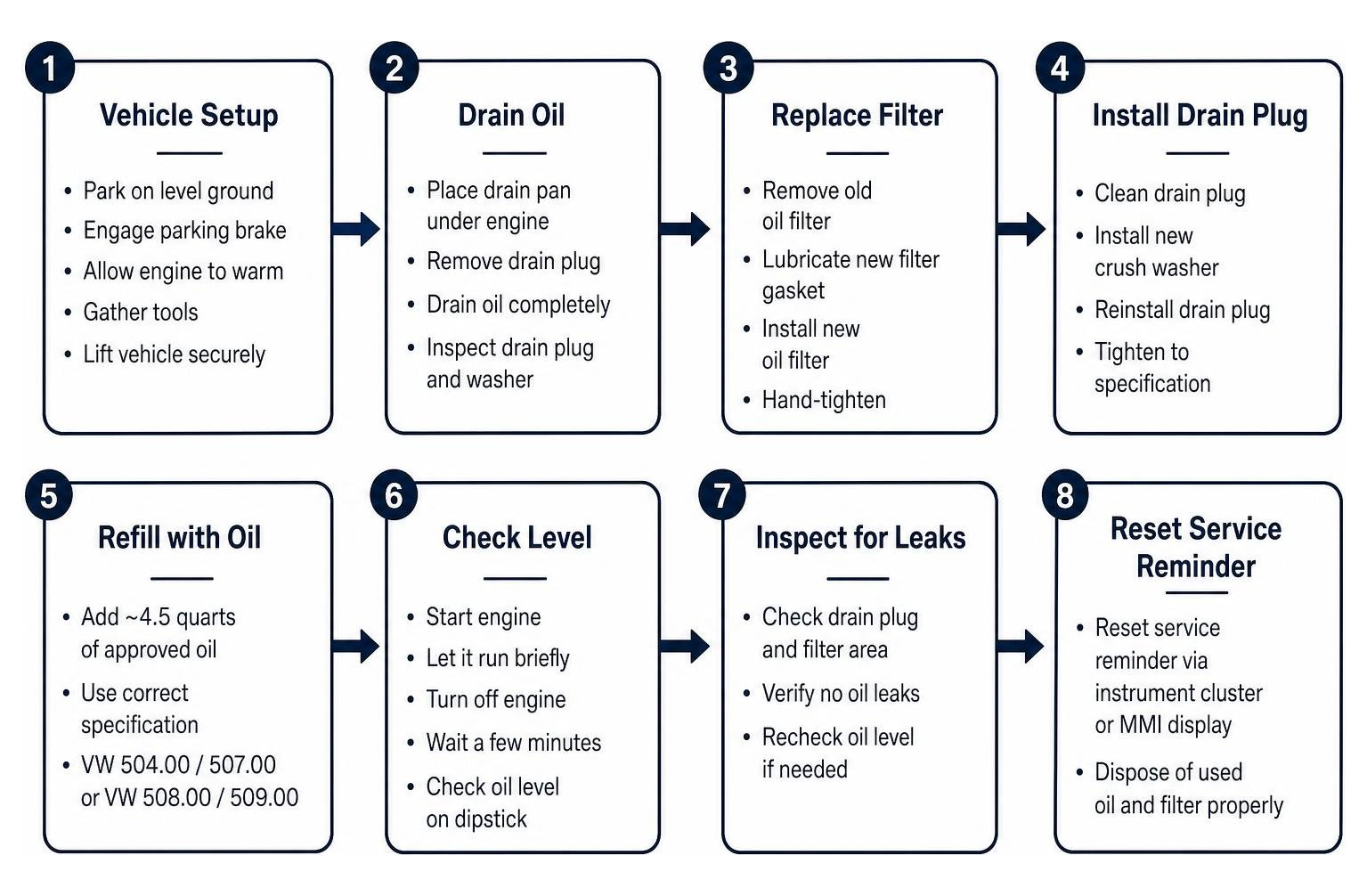
Prepare for an Audi A3 oil change
A clean, mess-free oil change starts with good preparation. Before turning a single bolt, gather all necessary tools and ensure your workspace is safe and organized.

Park your car on a solid, level concrete surface and engage the parking brake firmly. Place wheel chocks behind the rear tires. While warming the engine for two to three minutes helps the oil drain freely, never work around an engine that is scalding hot. Put on protective nitrile gloves and safety glasses to shield your skin and eyes from warm oil and road debris.
Tools and materials for an Audi A3 oil change
To complete the job efficiently, assemble the following items:
- Hydraulic floor jack and two rated jack stands (never work beneath a car supported only by a jack)
- Socket wrench and the correct socket size for your oil pan drain plug (or Torx/hex bit, depending on year)
- Dedicated oil-filter wrench or filter housing socket
- Low-profile drain pan with a capacity of at least 6 to 8 quarts
- Funnel and clean shop towels or microfiber rags
- Fresh, approved synthetic engine oil (roughly 4.5 quarts)
- New OEM-quality oil filter with fresh rubber O-rings
- New drain-plug crush washer or replacement drain plug
- Screwdrivers or Torx drivers to remove underside splash shields
Why replace the oil filter every time?
Skipping the oil filter during a service undermines the entire purpose of fresh oil. As the filter works, it traps microscopic carbon deposits, metal particles, and combustion contaminants. Over time, its filtration media becomes saturated.
If a filter becomes completely clogged, internal pressure forces open a bypass valve. When this valve opens, dirty, unfiltered oil circulates directly through your engine bearings and turbocharger, causing accelerated wear.
When installing your fresh filter:
- Always remove and discard the old rubber gasket or O-ring.
- Lightly coat the new rubber seal with fresh engine oil to ensure a tight, leak-free seal.
- Thread the new filter on carefully and tighten it hand-tight (or torque to factory spec if using a cartridge housing) to avoid damaging the threads.
Signs your Audi A3 may need an oil change
Don't wait for engine knocking to check your oil. Be on the lookout for these common warning signs:
- The electronic service interval display alerts you that service is due.
- The oil on the dipstick appears pitch black, thick, or feels gritty between your fingers.
- The oil level has dropped below the minimum fill line.
- You notice increased engine ticking, valve noise, or rough idling.
- An oil-pressure warning light illuminates on your instrument cluster.
- You detect a distinct burning-oil odor inside the cabin or under the hood.
If an oil pressure light flashes, pull over and turn off the engine immediately to prevent catastrophic internal damage.
How to perform an Audi A3 oil change step by step
Taking your time and keeping your workspace orderly makes an Audi A3 oil change straightforward and clean. Follow these steps to complete the job without spilling a drop.
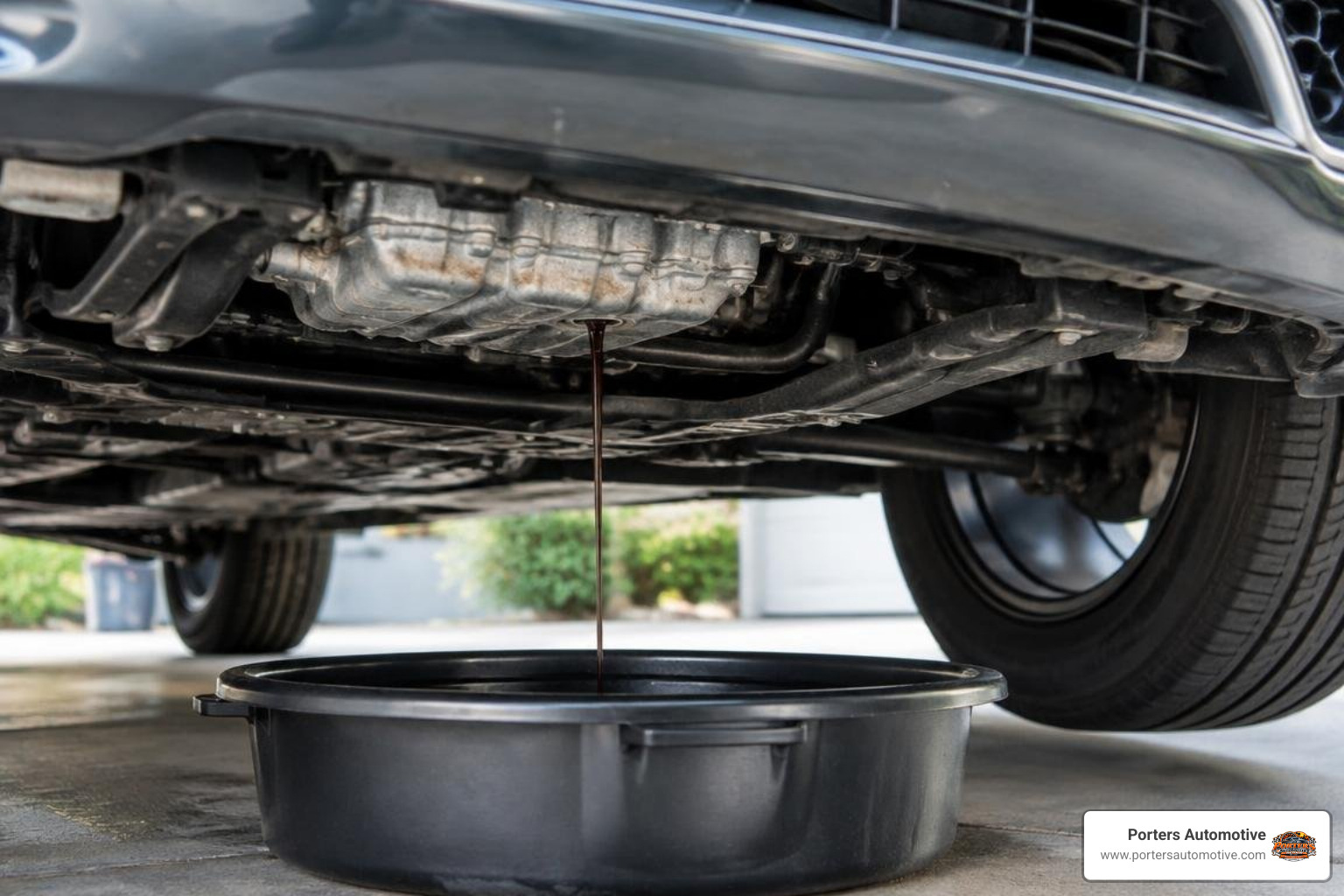
Step 1: Set up and safely raise the car
Park on level ground, apply the emergency brake, and chock the rear wheels. Pop the hood and remove the oil filler cap; opening the top of the engine relieves vacuum pressure and allows the old fluid to drain much faster and smoother.
Locate the approved factory lift points beneath the front chassis. Use your floor jack to lift the vehicle, then lower it onto sturdy jack stands. Give the car a gentle push to verify it is completely stable before sliding underneath. If your model features a plastic underside splash shield (belly pan), use your Torx or socket tool to remove the retaining screws and set the panel aside.
Step 2: Drain the old oil
Slide your drain pan directly beneath the oil pan drain plug. Position the pan slightly toward where the oil stream will shoot once the bolt is removed.
Using the appropriate box wrench or socket, loosen the drain plug counterclockwise. Once loose, finish unscrewing the plug by hand while applying inward pressure. Quickly pull the bolt away to avoid coating your hand in warm oil. Allow the crankcase to drain completely until the flow slows to an occasional drip.
Inspect the drain plug threads for damage, remove the old crush washer, and install a brand-new washer. Thread the plug back in by hand to prevent cross-threading, then tighten it with a torque wrench to the factory specification (typically around 22 ft-lbs / 30 Nm for standard steel pans; consult your manual for plastic pans that use special quarter-turn plugs).
Step 3: Replace the oil filter
With the drain pan still positioned underneath, locate your oil filter assembly. Depending on your engine generation, the filter may be a metal spin-on canister underneath or an accessible top-mount cartridge housing near the front engine cover.
Loosen the filter housing using your filter wrench. Allow any residual oil to drain into your catch pan before removing the unit completely. Wipe the mounting surface clean with a lint-free shop towel. Install the new filter element along with its lubricated fresh rubber O-ring. Tighten the new assembly hand-tight, or use a torque wrench on the housing cap if a specific rating (usually 25 Nm) is stamped on the plastic lid.
Step 4: Refill, check for leaks, and recycle the oil
Place a clean funnel into the engine oil filler neck. Pour in approximately 4 quarts of your manufacturer-approved synthetic oil, pausing before adding the final half-quart.
Remove the funnel, replace the oil cap, and start the engine. Let it idle smoothly for 60 to 90 seconds while monitoring the instrument cluster. Look beneath the vehicle to confirm there are no leaks around the drain plug or filter housing.
Turn the engine off and let the vehicle sit for three to five minutes so the oil drains back down into the pan. Pull the dipstick, wipe it clean with a rag, reinsert it fully, and pull it out again to check the level. Add additional oil in small increments until the fluid sits precisely in the hatched safe zone between minimum and maximum. Reinstall your underside splash shield, carefully lower the car off the jack stands, and pour your used oil into a sealed container for recycling at a local auto parts store or service center.
Reset the reminder and keep your Audi A3 service on schedule
After finishing the physical service, you must reset the internal maintenance computer. Failing to reset the display can cause confusion regarding your next service date. Familiarize yourself with the official Audi A3 service interval display instructions to ensure your system tracks mileage accurately. If you're ever uncertain about your service timing, reviewing when your Audi needs an oil change can help clarify proper scheduling.
How to reset the Audi A3 oil-change reminder
On modern Audi A3 models equipped with the Multi Media Interface (MMI) system:
- Turn the ignition on without starting the engine (press the start button without pressing the brake pedal).
- Press the MENU button on your center console.
- Select Car (or Vehicle), then navigate to Systems.
- Scroll to Servicing & checks and select Service intervals.
- Scroll down and select Reset oil change interval. Confirm your selection when prompted.
For older models with standard dash audio setups, press the SETUP button, navigate to Oil change interval, and confirm the reset. This procedure resets the oil reminder; comprehensive inspection reminders often require a dedicated diagnostic scan tool. Never reset this monitor without actually replacing the oil and filter.
Frequently asked questions about Audi A3 oil changes
Can I change my Audi A3 oil myself?
Yes, intermediate DIYers with basic mechanical skills can complete an oil change at home. The most critical requirements are safely lifting and supporting the vehicle, using the exact manufacturer-specified oil weight and VAG standard, replacing the filter gasket, and tightening the drain plug correctly. If you lack the required tools, have low-profile vehicle clearance challenges, or feel uncomfortable working beneath a raised car, scheduling a professional service visit is always the safest choice.
Should I use synthetic oil, and how much does the job cost?
Yes, you must use high-grade synthetic oil in your Audi A3. Modern turbocharged Audi engines generate substantial heat and rely on tight tolerances that conventional mineral oils cannot protect. The typical 2.0T or 1.8T engine holds roughly 4.5 quarts. A complete DIY service generally costs between $60 and $90 in quality parts, while professional shop service averages $169 to $245 depending on the model year, location, and labor rates.
What should I do if the oil warning stays on after the change?
If an oil-related light remains illuminated after you finish:
- Differentiate the warning: A yellow "Service Due" message simply means the MMI reminder needs resetting. A red "Oil Pressure" light indicates an urgent mechanical issue.
- Shut off the engine immediately if a red oil pressure light appears.
- Check the dipstick to ensure the crankcase is not underfilled or overfilled.
- Inspect the ground beneath the car for active leaks around the drain bolt or filter seal.
- Verify that the filter O-ring was installed properly and did not double-gasket against the engine block.
Conclusion
Routine maintenance is the single most important investment you can make in your Audi A3. By sticking to the factory schedule, choosing engine oil that satisfies VAG specifications, and replacing your filter at every interval, you protect your engine from premature wear and preserve your vehicle's resale value. Keep detailed maintenance records of every service, whether completed in your driveway or at a professional repair facility.
If you prefer to let experienced technicians handle your routine maintenance, fluid services, or diagnostics, our team is here to help. You can easily schedule maintenance and repair service with our trusted professionals in Tallahassee, Quincy, and Bradfordville. Feel free to contact Heath Porter and the crew at Porters Automotive whenever your Audi needs dependable, high-quality care.