November 2026 · Shop tips
When Does Your Audi Need an Oil Change?

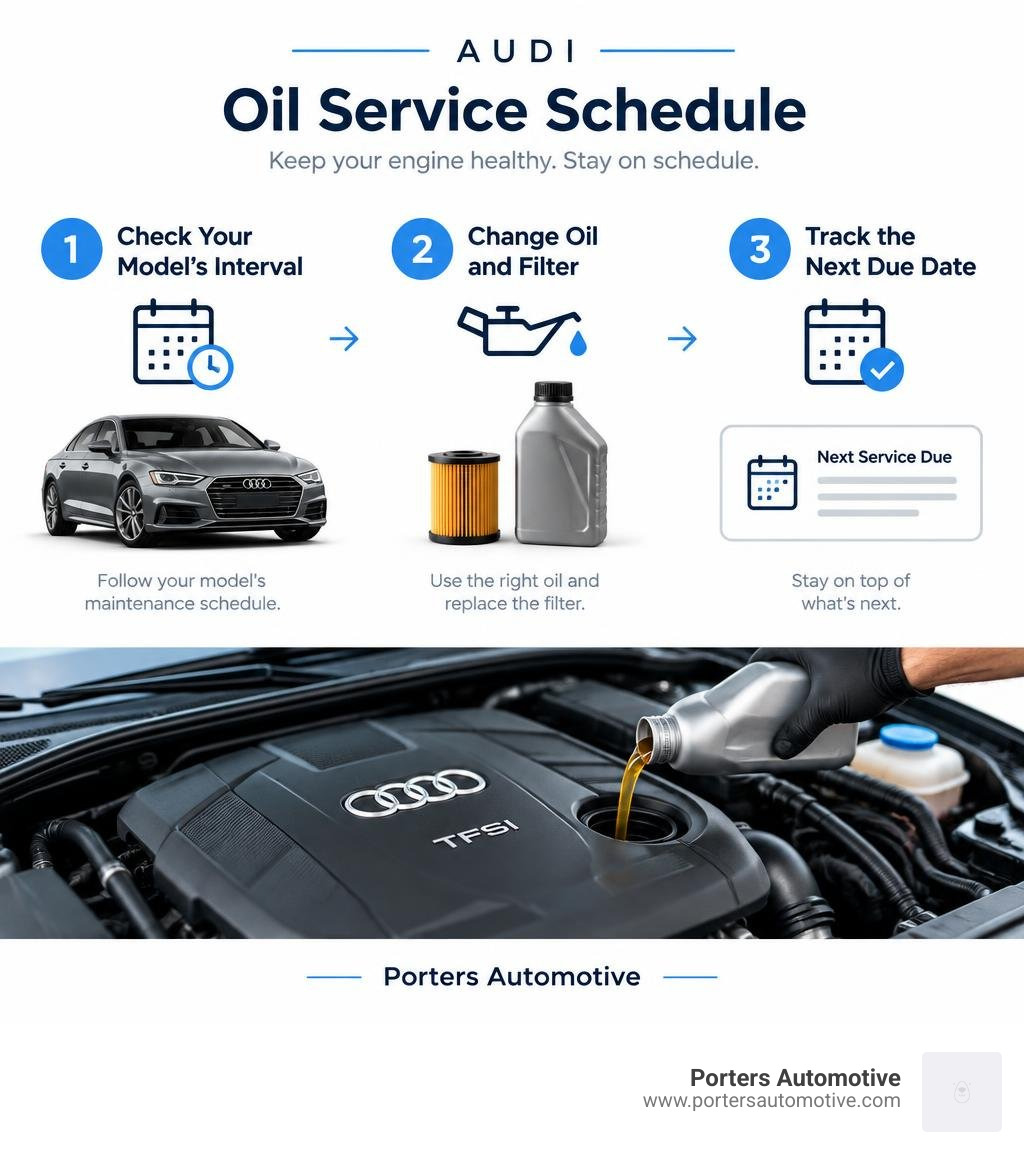
For many U.S. Audis, plan on an oil and filter change every 10,000 miles or 12 months, whichever comes first. Check your model's maintenance schedule before booking: intervals vary by model and market. If you make frequent short trips or drive in heavy stop-and-go traffic, ask whether a shorter interval makes sense. Use oil that meets your engine's VW specification, not just a familiar viscosity grade.
Staying on schedule helps protect the engine and avoids turning a routine service into a costly repair. This guide covers the schedule, oil choice, warning lights, and what happens during a change.
I'm Heath Porter, owner of Porters Automotive, where I've worked in automotive service since 2006. I'll use that hands-on maintenance experience to help you plan your next audi oil change with less guesswork.
Recommended Maintenance Schedules and Oil Types
German engineering prioritizes high performance, tight internal tolerances, and forced-induction efficiency. To keep these complex powertrains running smoothly, Audi relies on advanced synthetic lubricants designed to withstand extreme thermal breakdown and mechanical stress. Sticking to the factory schedule guarantees that vital components like your camshafts, hydraulic lifters, and turbocharger bearings receive clean, properly pressurized fluid.
You can review official baseline schedules such as the MY20 Audi Service Intervals and Additional Items or check the official 2017 Audi Maintenance Schedule - All Models to see how service milestones are structured across generations.
Standard Audi Oil Change Intervals
For modern TFSI (gasoline direct injection turbo) and TDI (turbocharged diesel) engines, Audi establishes a baseline minor maintenance interval of 10,000 miles or 12 months, whichever arrives first.
While extended intervals between 7,500 and 15,000 miles exist on some European variable-service programs, standard fixed schedules in the United States generally group maintenance around these parameters:
- Vehicles Under 70,000 Miles: Typically follow a 7,500 to 10,000-mile schedule under standard driving conditions.
- Vehicles Over 70,000 Miles: Benefit greatly from shortening intervals to every 5,000 to 7,500 miles to reduce wear on aging gaskets and tensioners.
- High-Performance Models (S, RS, and R8 lines): We strongly recommend changing the oil every 5,000 miles due to elevated cylinder pressures and high oil temperatures.
Selecting the Right Synthetic Oil and VW Specifications
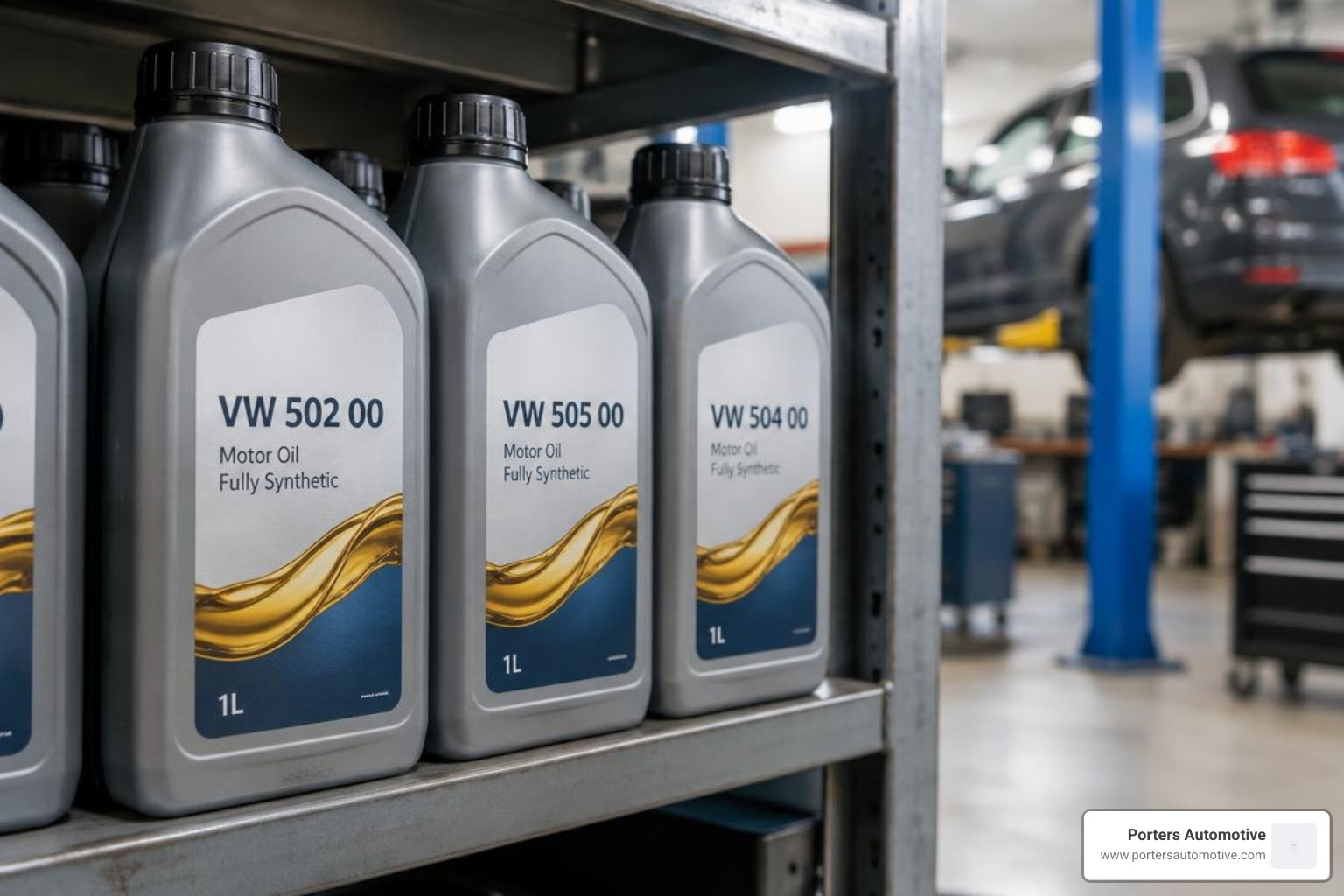
When selecting motor oil for an Audi, the viscosity on the front of the bottle (such as 0W-20, 5W-30, or 5W-40) tells only part of the story. The critical detail is whether the oil meets Volkswagen Group (VW) technical approval standards. Using an oil without the correct VW certification can lead to sludge development, accelerated timing chain wear, or premature clogging of catalytic converters and diesel particulate filters.
Here are the primary VW standards you will encounter:
- VW 502 00 / 505 00: A long-standing standard for many port- and direct-injected gasoline engines built before 2018 (commonly 5W-40 or 5W-30 full synthetic).
- VW 504 00 / 507 00: A low-SAPS (sulfated ash, phosphorus, and sulfur) formulation designed for extended drain intervals, modern TFSI engines, and clean diesel engines equipped with particulate filters (commonly 5W-30).
- VW 508 00 / 509 00: A newer, low-viscosity, fuel-economy-optimized formulation (typically 0W-20) developed for ultra-modern engines like the 2.0T B-cycle and latest 3.0T V6 powerplants.
Always verify the exact specification listed in your owner's manual or under-hood emissions sticker before adding fluid.
Normal Oil Consumption vs Severe Driving Conditions
Did you know that Audi considers oil consumption of up to approximately 0.5 liters per 1,000 kilometers (around 1 quart every 1,200 miles) to be within standard factory tolerance? Modern low-friction piston rings allow a tiny amount of oil into the combustion chamber to reduce drag, meaning checking and topping up fluid between scheduled services is entirely normal.
However, certain driving habits qualify as "severe driving conditions," which degrade oil much faster:
- Frequent short trips under 5 miles (the engine never reaches full operating temperature, allowing water and fuel vapor to accumulate in the crankcase).
- Extensive stop-and-go city commuting or long periods of engine idling.
- Driving in dusty or humid Southern environments, such as during hot Tallahassee summers.
- Regular towing, aggressive driving, or high-speed mountain driving.
Under these conditions, synthetic oil additives deplete quickly. To protect your engine, follow severe maintenance guidelines and change your oil every 5,000 miles or 6 months.
How to Perform a DIY Audi Oil Change
For car owners who prefer wrenching at home, changing the oil on an Audi requires patience, the right specialty tools, and adherence to exact procedures.
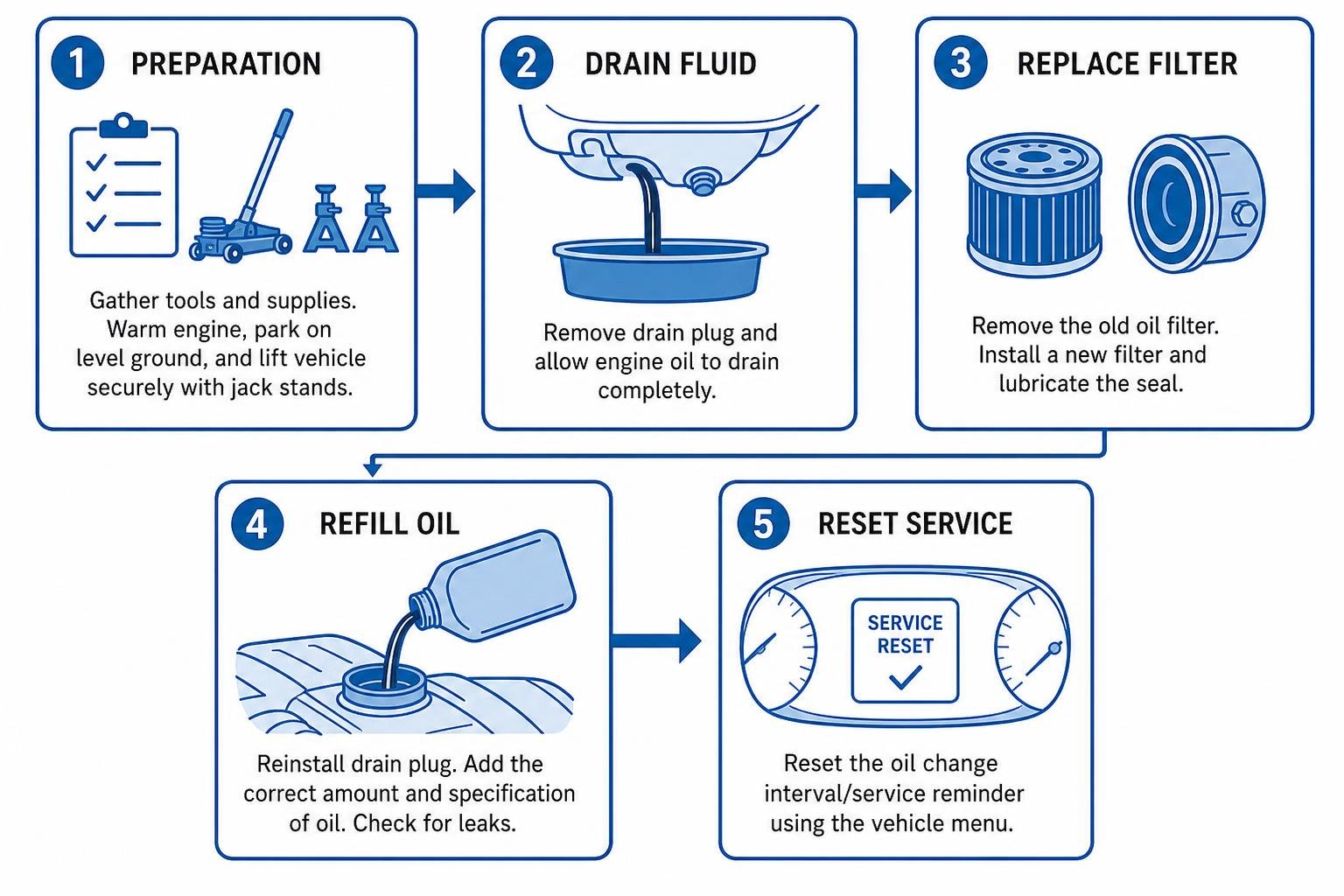
Required Tools, Supplies, and Safety Preparation
Before raising your vehicle, assemble the necessary supplies:
- Hydraulic Floor Jack and Rated Jack Stands (or sturdy drive-on ramps with wheel chocks).
- Undertray Fastener Tools: Torx bits (T25, T30) and a flat-blade screwdriver for belly pan Dzus pins.
- Drain Plug Socket / Hex Bit: Commonly an 8 mm or 10 mm hex bit or standard metric socket (or special plastic drain plug tool for late-model composite oil pans).
- Oil Filter Socket: Typically a 32 mm or 36 mm low-profile socket for top-mounted cartridge housings.
- Large Drain Pan: Minimum 10 to 12-quart capacity to capture high-volume flow without splashing.
- New OEM-Grade Filter Kit: Must include the correct filter element and fresh rubber O-rings.
- Fresh Crush Washer or Drain Plug Replacement: Never reuse old sealing washers.
- Approved Synthetic Engine Oil: Ensure correct VW specification and appropriate volume.
- Safety Gear: Nitrile work gloves and wrap-around safety glasses.
Safety Warning: Never work underneath a vehicle supported solely by a hydraulic jack. Always set the car on rated jack stands positioned at designated factory lift points and engage your parking brake.
Draining Old Fluid and Replacing the Filter
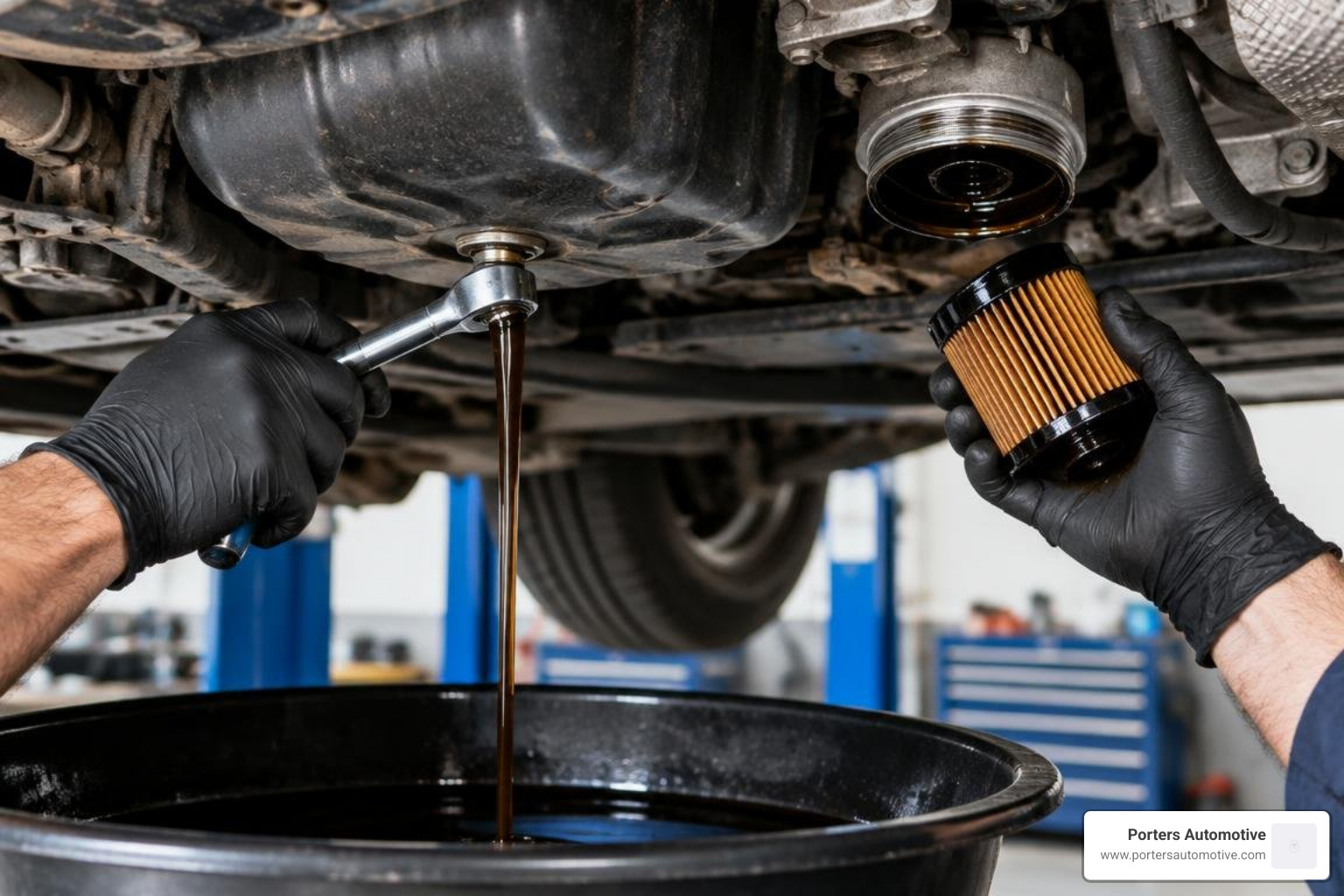
- Warm the Engine: Run the car for 3 to 5 minutes. Warm oil flows much faster and carries suspended contaminants out with it. Do not drain oil at boiling operating temperature to avoid severe burn risks.
- Raise and Secure the Vehicle: Level positioning is ideal, but if lifting the front end only, allow extra time for the fluid to drain completely toward the rear drain plug.
- Remove the Belly Pan: Remove the Torx screws and quick-release pins securing the lower aerodynamic undertray, then lower the panel safely out of the way.
- Position Drain Pan & Remove Plug: Place your drain pan beneath the oil sump. Loosen the drain plug using the correct socket, carefully unthread it by hand, and let the old fluid drain out for 5 to 10 minutes.
- Service the Oil Filter Housing: Many modern Audis feature top-mounted cartridge filters located inside the engine compartment; others house them underneath near the pan. Use your 32 mm or 36 mm socket to unscrew the plastic housing.
- Swap Filter Element & Seals: Pull out the old paper cartridge. Remove the old rubber O-ring from the housing threads, slide on the new O-ring from your filter kit, and lubricate it with a dab of clean motor oil. Click the new filter element into the housing.
- Reinstall Filter and Drain Plug: Thread the filter housing back on and torque to factory specification (typically 25 Nm / 18 lb-ft). Install the drain plug with a brand-new crush washer and torque to specification (generally 26 to 30 Nm / 19 to 22 lb-ft for steel plugs). Reinstall the engine undertray.
Refilling Oil, Resetting Service Indicators, and Disposal
- Fill with Fresh Oil: Insert a clean funnel into the engine oil fill neck. Pour in approximately 0.5 quarts less than the full factory capacity to prevent accidental overfilling.
- Check for Leaks: Start the engine and let it idle for 60 to 90 seconds while monitoring underneath for leaks around the drain plug and filter housing. Shut off the engine.
- Reset the Service Reminder: On modern models, you can reset the basic Oil Change Interval directly through the Audi MMI screen (
Menu>Car>Servicing & Checks>Reset Oil Change Interval). Major inspection resets may require a dedicated diagnostic scan tool like Ross-Tech VCDS or an OBD-II diagnostic tablet. - Proper Waste Disposal: Never pour used motor oil down the drain or into the trash. Pour your used oil into a secure container and drop it off at an auto parts retailer or municipal recycling center.
Monitoring Engine Oil Levels and Warning Lights
Most modern Audis no longer include a traditional under-hood dipstick. Instead, they rely on electronic ultrasonic level sensors that communicate through the infotainment display.
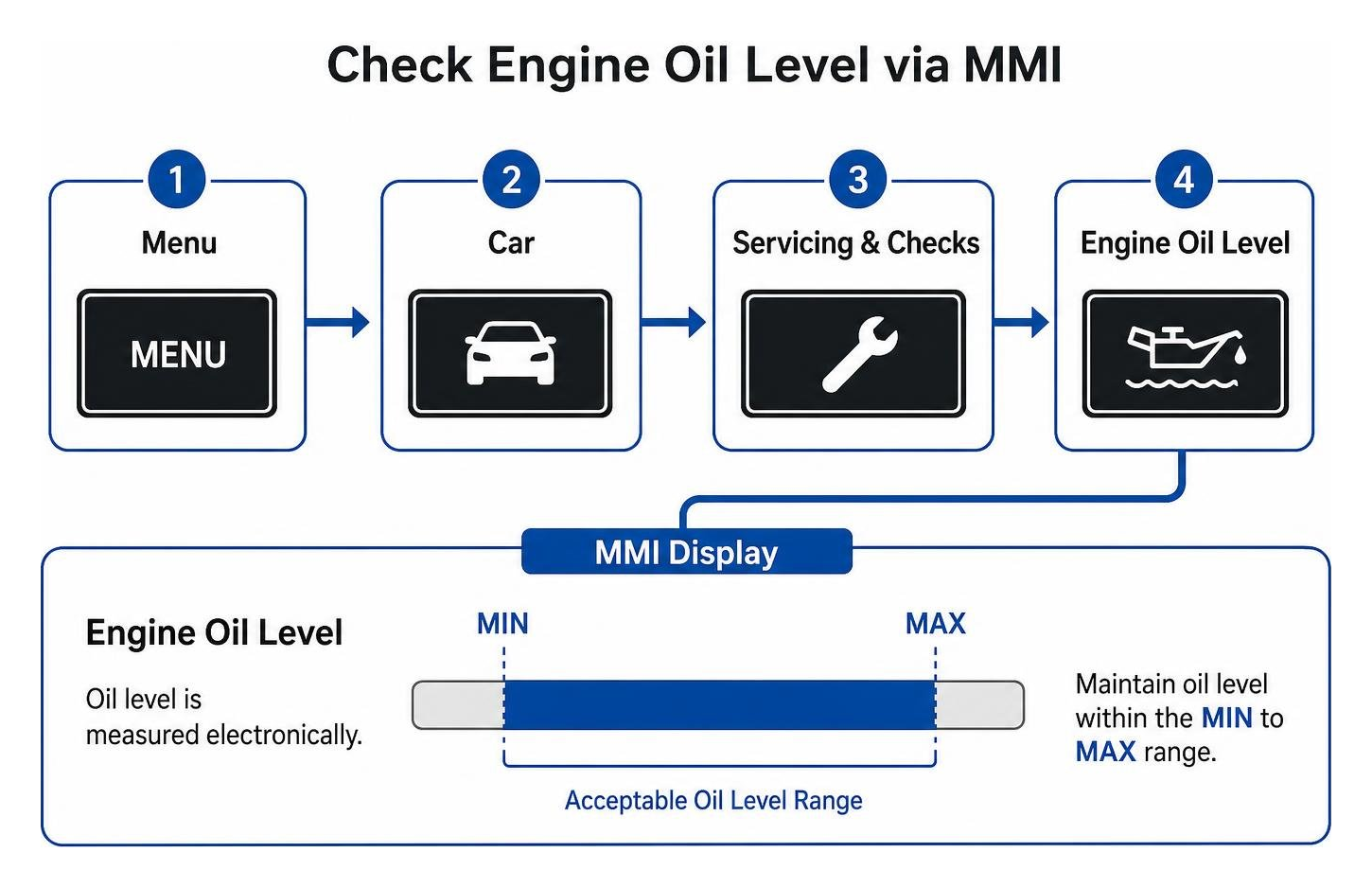
Checking Oil Levels via MMI and Electronic Dipstick
To read your digital oil level accurately without a physical dipstick, follow this standard electronic procedure:
- Park your Audi on a completely flat, level surface.
- Bring the engine up to normal operating temperature (oil temp roughly 140°F / 60°C or higher).
- Turn the engine off, switch the vehicle's ignition to accessory mode (power on, engine off), and wait roughly 2 to 3 minutes for the oil to settle into the oil pan.
- Navigate through the MMI dial or touchscreen: Select Menu / Vehicle > Settings & Service (or Car) > Servicing & Checks > Oil Level.
- The digital gauge will display a bar between MIN and MAX. The distance between MIN and MAX represents roughly 1.0 quart (1.0 liter) of oil. If the bar is near MIN, add half a quart of certified oil, run the engine briefly, let it settle, and check again.
Yellow Oil Level vs Red Oil Pressure Warning Lights
It is crucial to understand the distinct difference between the yellow and red oil dashboard alerts:
| Indicator Light | Meaning | Immediate Action Required |
|---|---|---|
| Yellow Oil Can Symbol | Low Engine Oil Level | The oil level has reached the bottom threshold. You can drive safely to a nearby store or shop, but you should top up the oil with the correct specification as soon as possible. |
| Red Oil Pressure Light | Critical Loss of Oil Pressure | STOP THE VEHICLE IMMEDIATELY. This indicates a severe mechanical malfunction (oil pump failure, major leak, or sensor breakdown). Continuing to run the engine will cause catastrophic failure within seconds. Safely pull over, shut down the engine, and arrange a tow. |
Audi Oil Capacities, Costs, and Failure Risks
Maintaining your Audi's powertrain properly requires understanding overall operational costs, correct engine capacities, and what happens when maintenance is ignored.
Estimated Audi Oil Change Cost Breakdown
The cost of an Audi oil service reflects high fluid capacities and premium synthetic lubricants. For an Audi A3, average dealer and independent repair costs typically range between $169 and $199:
- Parts Cost: Estimated between $109 and $110 (includes 5 to 7+ quarts of high-spec European synthetic oil, OEM cartridge filter, and new seals).
- Labor Cost: Estimated between $61 and $89 (covers undertray removal, comprehensive multi-point inspection, electronic level verification, and computerized diagnostic service resets).
While doing it yourself saves some labor costs, having certified technicians handle the service ensures that underlying issues—such as minor oil leaks, worn control arm bushings, or cooling system seepage—are discovered early.
Engine Oil Capacities Across Audi Models
Every Audi engine layout has strict fill capacities. Overfilling can foam the oil and cause catalytic converter damage, while underfilling leads to oil starvation and bearing wear.
| Audi Model & Engine Family | Engine Displacement | Average Oil Capacity (Liters / Quarts) | Recommended VW Spec |
|---|---|---|---|
| Audi A3 / A4 / Q3 / Q5 (2.0T TFSI) | 2.0L Turbo 4-Cylinder | 5.2 – 5.7 L (5.5 – 6.0 qt) | VW 502 00 / 504 00 / 508 00 |
| Audi S4 / S5 / SQ5 / Q7 (3.0T V6) | 3.0L Supercharged / Turbo V6 | 6.8 – 7.5 L (7.2 – 7.9 qt) | VW 502 00 / 504 00 / 508 00 |
| Audi RS3 / TT RS (2.5T TFSI) | 2.5L Turbo 5-Cylinder | 7.1 L (7.5 qt) | VW 502 00 / 504 00 |
| Audi S6 / S7 / RS6 / RS7 (4.0T V8) | 4.0L Twin-Turbo V8 | 8.2 – 9.0 L (8.7 – 9.5 qt) | VW 504 00 / 507 00 |
| Audi R8 (5.2L FSI V10) | 5.2L Naturally Aspirated V10 | 8.3 – 10.0 L (8.8 – 10.5 qt) | VW 502 00 / 504 00 |
Note: Capacities vary by model year and chassis code. Always verify dry versus service fill capacities via the official maintenance manual.
Consequences of Neglected Maintenance on Turbochargers and Chains
Neglecting your Audi oil service can turn a well-engineered engine into an expensive repair project. As engine oil ages, heat breaks down its protective additives, transforming lubricant into dark, tar-like engine sludge.
Sludge buildup causes three major points of engine failure:
- Turbocharger Bearing Seizure: Audi turbochargers spin in excess of 150,000 RPM and rely entirely on a constant flow of pressurized oil. Sludge restricts the tiny oil feed lines, starving the center bearings and leading to blown turbo seals or impeller destruction.
- Timing Chain & Tensioner Failure: Audi timing chains use hydraulic tensioners powered by engine oil pressure. Dirty oil clogs tensioner check valves and accelerates chain link wear, resulting in chain stretch, skipped timing, and bent valves.
- Piston Ring Coking: Old oil deposits bake onto low-tension piston rings, causing them to stick. This leads to heavy cylinder scoring, blow-by, and severe oil consumption.
Frequently Asked Questions About Audi Maintenance
Can I use conventional oil instead of synthetic in my Audi?
No. Modern Audi engines require high-performance synthetic lubricants. Conventional mineral oils cannot handle the extreme internal temperatures generated by direct-injection turbochargers and high-compression combustion chambers. Using conventional oil will void factory warranties, cause rapid sludge buildup, and risk engine failure.
Should I replace the oil filter at every oil change?
Yes, always install a new oil filter with every single oil change. Modern Audi oil filters use dense pleated synthetic media designed to trap fine soot, carbon, and microscopic metal shavings. If left in place for multiple oil intervals, the filter media will saturate, triggering the internal bypass valve and circulating unfiltered oil throughout your engine.
How do I check engine oil level if my Audi has no physical dipstick?
Warm the engine up, park on level ground, switch the engine off, and turn the ignition back to accessory mode. Let the car sit for 2 to 3 minutes, then enter the MMI screen and select Menu > Car (or Vehicle) > Servicing & Checks > Oil Level. The graphic display shows current fill status between minimum and maximum marks.
Conclusion
Keeping up with your regular Audi maintenance is the single best investment you can make to protect your vehicle's performance, fuel economy, and long-term resale value. Whether you drive a daily A4 commuter or an RS performance model, fresh, VW-certified synthetic oil keeps internal tolerances protected for thousands of worry-free miles.
If you are located in the Big Bend area—including Tallahassee, FL, Quincy, FL, or Bradfordville, FL—and prefer having factory-trained specialists handle your scheduled maintenance, our team is ready to help. Visit Porters Automotive to schedule your next service with expert technicians who treat your German vehicle with the care it deserves.