October 2026 · Shop tips
What to Check Before Booking Collision Repair
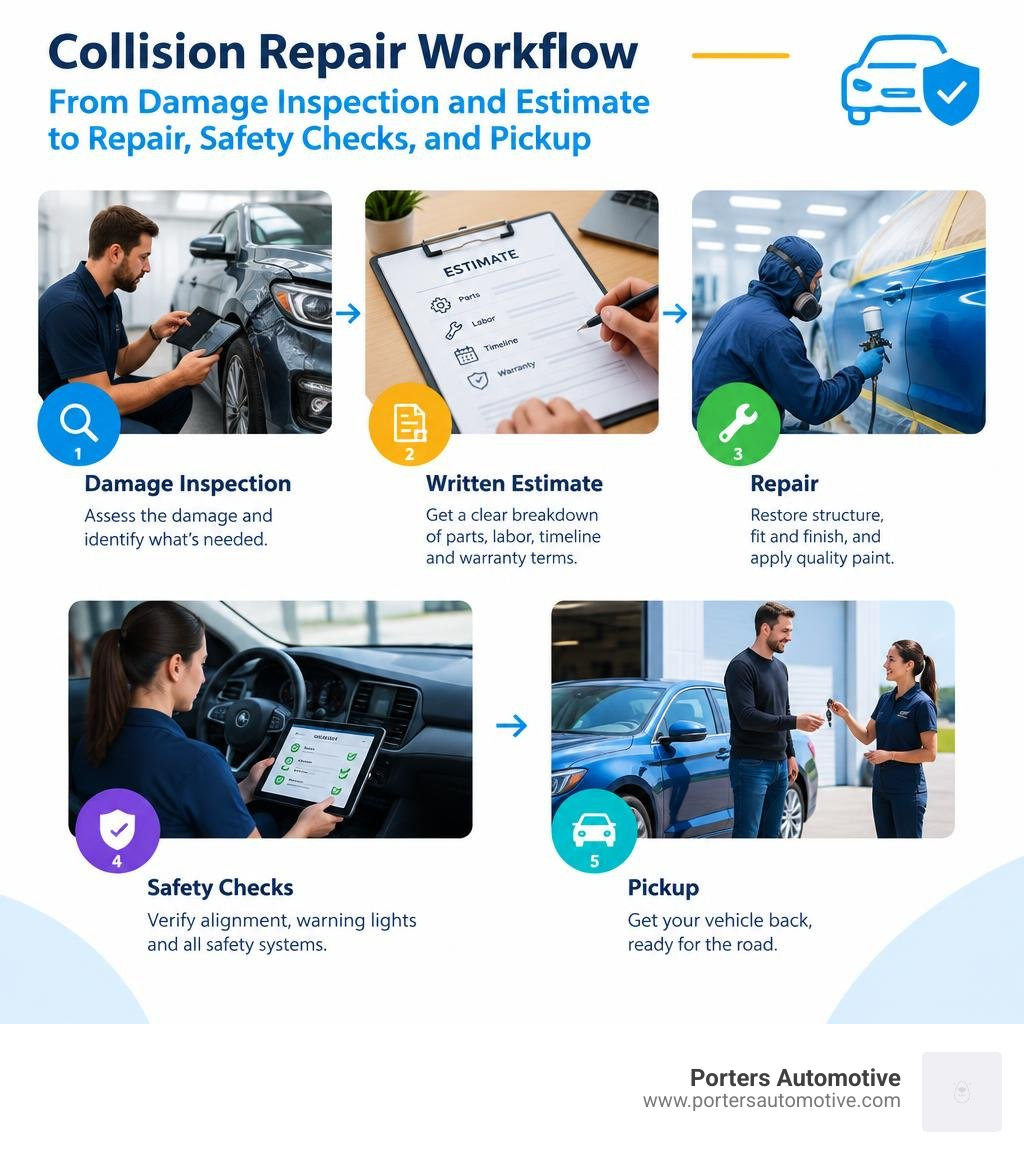
If you are comparing repair facilities and want the kind of precision an experienced auto body shop delivers for your vehicle, ask for a written estimate that lists parts, labor, the expected timeline, and warranty terms. Confirm that the shop can handle your vehicle's specific damage and clearly explain how it checks structural alignment, dashboard warning lights, and active safety systems before returning the car. Some drivers searching for an arrow body shop simply want a facility that points them toward transparent pricing and verified safety checks every time.
A facility's name or online rating alone will not tell you how long the repair will take or what you will ultimately pay out of pocket. Always compare the written estimate and detailed repair plan with another qualified facility before authorizing teardown or repairs. Look for a team that strictly adheres to OEM repair procedures, utilizes computerized 3D measuring equipment, and performs pre- and post-repair diagnostic scans. These vital practices help protect your vehicle's structural integrity, crash safety systems, advanced driver assistance features, and long-term resale value.
I'm Heath Porter, owner of Porters Automotive in Tallahassee, and I've worked in vehicle service and repair since 2006, including comprehensive collision repair and diagnostics. Navigating the aftermath of an accident can be stressful, but knowing what questions to ask and understanding the key repair stages will give you confidence throughout the entire restoration process.
Collision Repair Services Provided by the Shop
When evaluating collision repair services, you need to know exactly what happens behind the garage doors. Quality auto body repair is far more than smoothing out visible dents or applying a fresh coat of glossy paint. Modern vehicles are complex machines designed with crumple zones, ultra-high-strength steel alloys, lightweight aluminum panels, and integrated driver-assistance sensors that require meticulous attention during every stage of reconstruction.
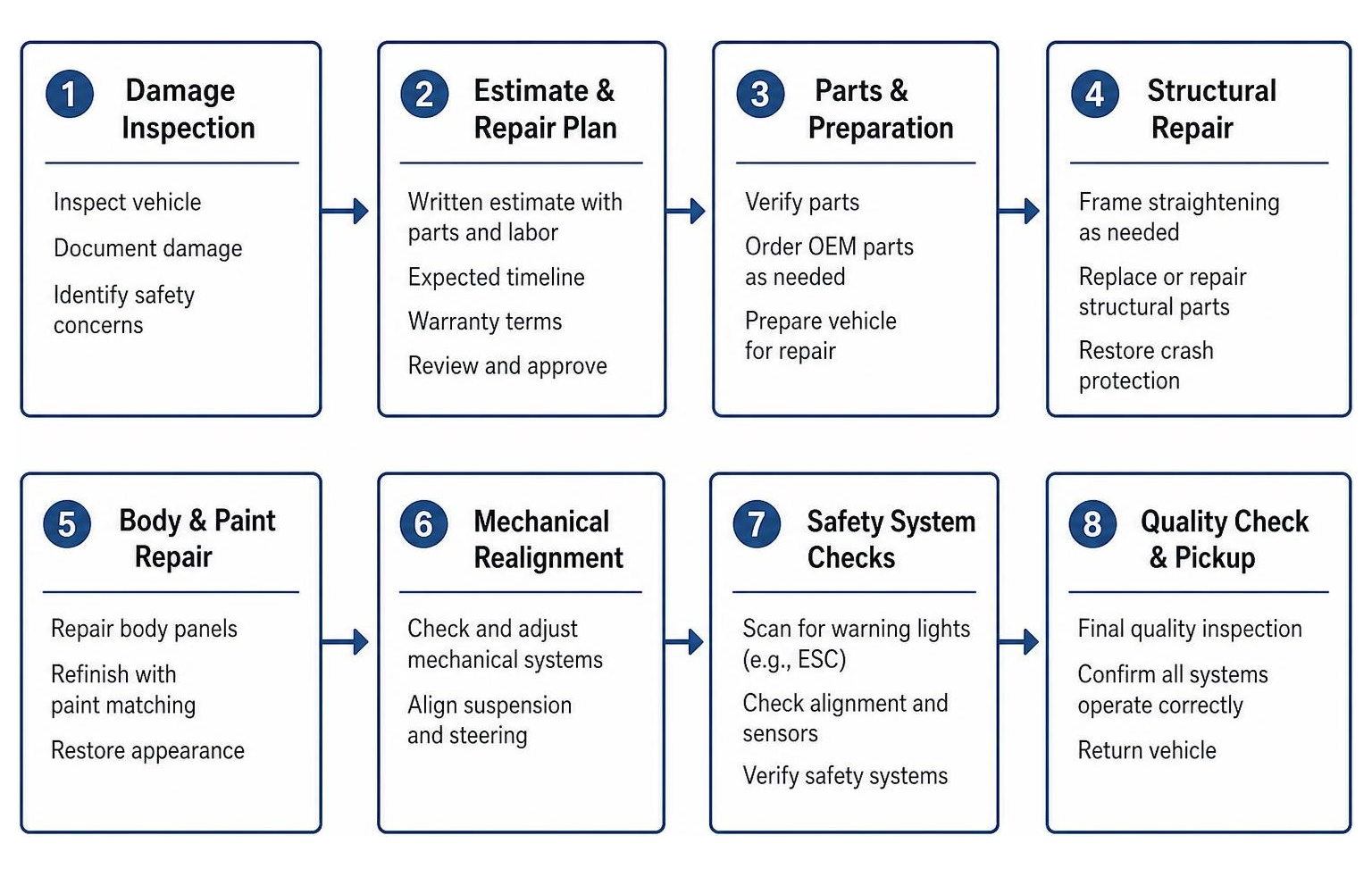
A comprehensive collision facility handles everything from paintless dent removal and precision paint matching to structural frame straightening and intricate mechanical realignments. When choosing a repair partner, ensure they adhere strictly to original equipment manufacturer (OEM) repair procedures, as recommended by industry training organizations. This adherence ensures your car maintains its structural integrity, factory crash ratings, and long-term durability.
The Shop’s Diagnostic Process for Warning Lights
Modern collisions frequently trigger complex electronic errors alongside physical sheet metal damage. One common issue drivers encounter is the Electronic Stability Control (ESC) warning light—often displayed on dashboards like a 2019 Jeep Compass as a yellow circle arrow containing an "A" and an exclamation point, or a vehicle icon with squiggly traction lines.
Aw, rats! No one likes pesky warning lights popping up right after an impact or shortly after driving off the lot! While yellow warning lights indicate a fault rather than an immediate critical shutdown (which is typically signified by a red alert), ignoring them compromises active safety. The ESC system relies on wheel speed sensors, steering angle sensors, and yaw-rate monitors to prevent skids, roll-overs, and loss of directional control.
When diagnosing dashboard symbols such as a stability arrow, body shop technicians follow a thorough process:
- Running pre-repair full-system scans to identify stored fault codes across all vehicle electronic control modules.
- Inspecting physical wiring harnesses, wheel hubs, suspension linkages, and wheel speed sensors for impact damage or corrosion.
- Calibrating advanced steering and yaw sensors using specialized diagnostic software and targets.
- Reviewing manufacturer technical service bulletins, active recalls, and warranty extensions.
- Performing post-repair dynamic scans and road tests to confirm the fault is resolved and warning lights stay off permanently.
Structural Repair and Panel Alignment at the Shop
Restoring structural integrity is the most critical part of collision repair. Vehicles today feature unibody construction, meaning the frame and body are integrated into one continuous structure. Even a minor fender bender can shift chassis alignment by fractions of an inch, leading to uneven tire wear, compromised suspension geometry, and misaligned safety sensors.
Using advanced computerized measuring benches, technicians pull and realign the frame back to strict OEM tolerances. Once the chassis is plumb, replacement panels, doors, hoods, and fenders are fitted and aligned to match exact factory gap specifications before entering the paint booth for computerized color matching. This level of precision matters because modern vehicles rely on tightly controlled panel gaps for proper aerodynamics, noise reduction, and sensor performance. A shop that rushes through panel alignment may leave you with wind noise, water leaks, or advanced driver-assistance systems that fail to read the road correctly.
Understanding Repair Estimates and Insurance Claims

Navigating the financial side of auto body repairs can feel overwhelming. A trustworthy facility provides fully transparent pricing, itemizing labor rates, body supplies, paint time, sublet operations, and part categories.
When reviewing your estimate, you will generally encounter three categories of replacement components:
| Part Type | Description | Warranty & Fit | Cost Profile |
|---|---|---|---|
| OEM (Original Equipment Manufacturer) | Built directly by your vehicle's maker to exact original specifications. | Highest compatibility; retains full factory warranty protection. | Premium price point. |
| Aftermarket (Certified) | Produced by third-party manufacturers to match OEM form and function. | Strong compatibility when certified by CAPA; independent warranties. | Moderate savings (20% to 40% less). |
| Recycled / LKQ (Like Kind Quality) | Clean, undamaged original components sourced from donor vehicles. | Original fit and finish; inspected thoroughly for structural integrity. | Budget-friendly and eco-friendly. |
Handling insurance claims smoothly is another hallmark of a dedicated repair center. Reputable shops work directly with insurance adjusters, submit digital photo documentation, and handle supplemental claims if hidden damage is discovered after teardown. Bumper covers, for example, often conceal bent reinforcement bars or crushed energy absorbers that can only be identified once the exterior panels are removed. Proactive communication between the shop and your insurer ensures you are not left covering unexpected out-of-pocket costs.
Before signing any repair authorization, ask the shop to walk you through each line item on the estimate. A detailed estimate should separate parts from labor, identify which parts are OEM versus aftermarket or recycled, and explain any shop supplies or hazardous waste fees. If the estimate seems vague or the shop is reluctant to explain charges, treat that as a red flag. The best repair facilities welcome questions and document every step of the repair process so you can see exactly what you are paying for.
Key Standards for Quality Auto Body and Stability Diagnostics
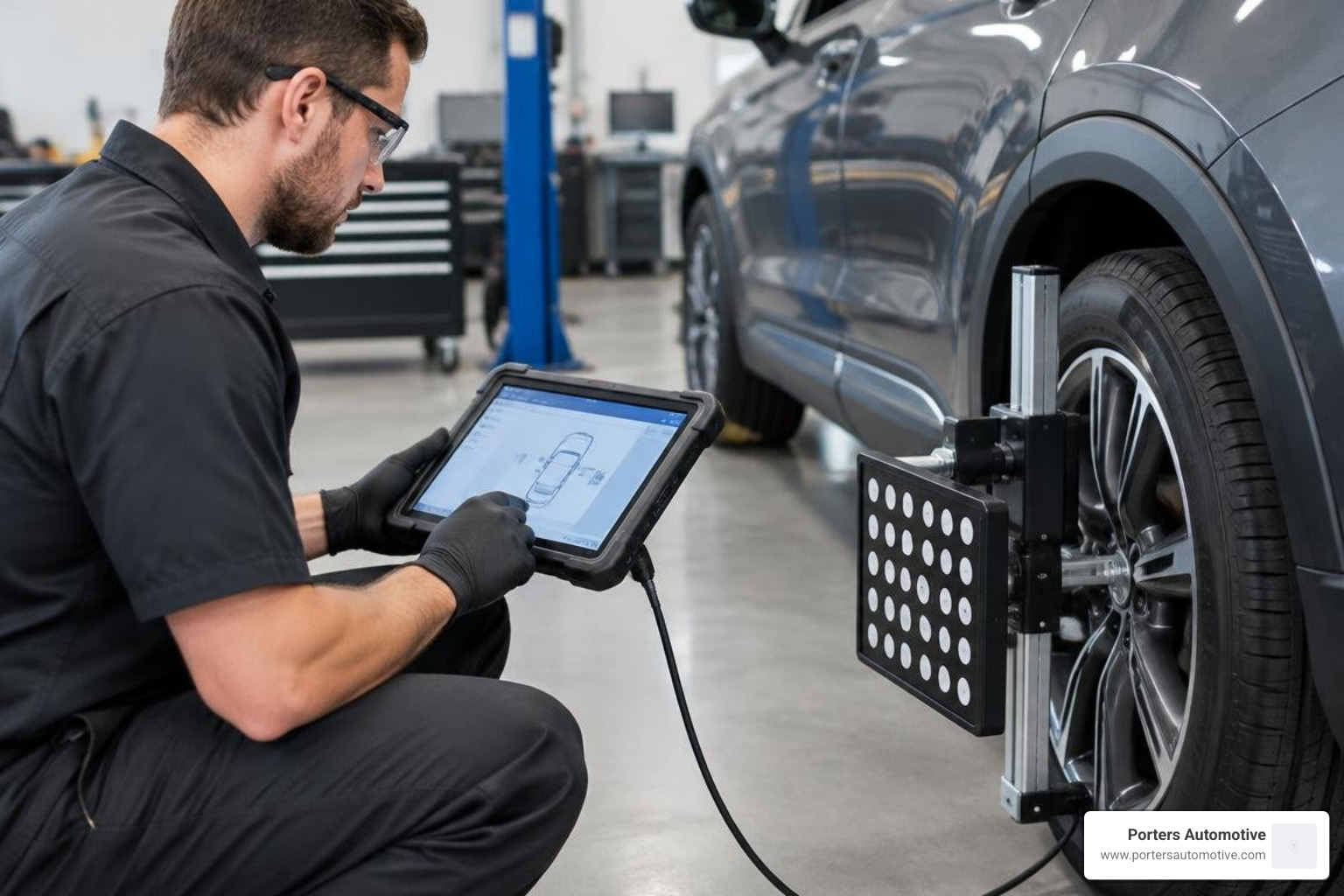
Never settle for superficial repairs when vehicle safety is on the line. Quality assurance requires verified testing before you take the keys back. Modern vehicles contain dozens of interconnected electronic systems that must be restored to original factory specifications.
Here are the critical safety inspections every professional shop must perform after structural and mechanical repairs:
- 3D Frame and Wheel Alignment: Verifying four-wheel alignment and unibody dimensions to ensure straight tracking and even tire contact.
- ADAS and Sensor Recalibration: Calibrating forward-facing radar, lane-departure cameras, blind-spot monitors, and ESC steering angle sensors using specialized calibration targets.
- Torque and Fastener Audit: Confirming all suspension bolts, subframe mounts, steering linkages, and safety components meet exact factory torque specs.
- Diagnostic Trouble Code (DTC) Clearing: Running a final post-repair scan across all vehicle modules to guarantee no lingering communication faults remain.
- Dynamic Road Testing: Testing the vehicle across various road speeds, braking situations, and maneuvers to ensure active safety systems engage seamlessly.
These inspections are not optional extras. They are the difference between a repair that merely looks good in the parking lot and one that performs correctly in an emergency. A shop that skips post-repair calibration may return a vehicle that tracks straight but cannot detect a vehicle in its blind spot, or that brakes evenly but cannot engage stability control when the rear end begins to slide. Always ask for documented proof of these diagnostic scans and calibrations before accepting your vehicle.
Frequently Asked Questions About Collision Repair
How long does a standard collision repair usually take?
Minor cosmetic repairs and paintless dent removal usually take between 2 to 4 days. Moderate to severe collision repairs requiring structural straightening, extensive panel replacement, and paint refinishing typically take 1 to 3 weeks. Timelines depend heavily on parts availability, insurance adjuster approval speeds, and required paint curing times.
Can auto body shops fix electronic stability control and dashboard warning lights?
Yes. Full-service collision centers possess the advanced scan tools and diagnostic equipment required to troubleshoot ESC faults, replace damaged wheel speed sensors, realign steering angle sensors, and reset dashboard warning indicators after a collision. The process typically begins with a full-system scan to identify stored fault codes, followed by physical inspection of sensors and wiring, and ends with recalibration and a road test to confirm the warning light stays off.
What warranty coverage should I expect on auto body repairs?
A reputable repair facility should back their workmanship with a dependable service warranty. In the automotive repair industry, leading networks and certified shops provide at least a 12-month or 12,000-mile warranty covering repair labor and paint application, ensuring complete peace of mind down the road. Ask for the warranty terms in writing before you authorize any work, and keep your repair documentation in a safe place in case you need to file a claim later.
Conclusion
Finding the right repair facility ensures your vehicle leaves the shop looking pristine and performing safely. From verifying structural unibody alignment and paint precision to resolving electronic stability control warning lights, choosing an experienced team makes all the difference. When you need fast, dependable service, certified diagnostics, and top-tier collision care, turn to the trusted professionals at Porters Automotive.